

02 Oct 5 Hypnotic Techniques to Enrapture Your Listeners
Affiliate Disclosure: We only share resources that we personally use and trust. Cool Wisdom Books is an affiliate of Hypnosis Downloads. If you choose to purchase through the links , we may earn a small commission at no extra cost to you. Your support helps sustain the ongoing historical research and digital archiving work at Cool Wisdom Books.
5 hypnotic techniques to enrapture your listeners
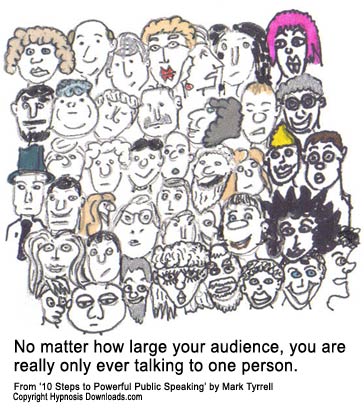
The first thing any good hypnosis trainer will tell you is that to be an effective hypnotist, you need to be confident. That way you inspire confidence in your subject and they are free to relax with you.
The same is true if you want to hypnotize your audience when presenting. First, you need to inspire confidence in them, and to do that you need to be free of anxiety.
And when I talk about hypnotizing your audience, please forget the clichés of watch swinging, cluck-like-a-chicken merchants. I’m talking about the hypnosis of life.
Help your audience leave the room
When you hypnotize someone you get them to “leave the room” as they “travel” along your narrative within their mind.
You achieve this by focusing their attention so intently that your words start to have a real effect on their experience – both conscious and unconscious. A skilled hypnotist can help you change the workings of your immune system or blood flow with their words. Think what effect you could have on an audience you are looking to influence.
So why do I talk about “hypnosis” when describing the effect a great presenter has?
Hypnosis and the art of presenting
Hypnosis involves:
- Narrowed Focus
- Disassociation
- Learning
Any presenter will agree that you want to be compelling enough to focus your audience on what you are saying. You want them disassociated from their environment and concerns so that they travel with you to other times, places and possibilities. And you want them to adopt, at least for a while, new ways of seeing reality.
Hypnosis in therapy is so powerful because it helps people learn new ways of responding to life so that low confidence, phobias or addictions no longer trip them up. When you present powerfully you focus your audience’s attention so narrowly that the nature of their learning becomes hypnotic rather than merely conscious. This kind of learning feels a lot more profound for people. But there are different kinds of audience trances..
Avoiding the boredom trance
If you are uninspiring then your audience may certainly psychologically “leave the room” not by following your ideas but as an attempt to escape your talk. They might start to imagine what they’ll do later, what they’ll cook for dinner, or their upcoming social arrangements. They are disassociated but not in the way we want them to be. There are specific techniques to compel your audiences in just the right way.
Crowd hypnosis
The greatest public presenters will captivate audiences with their words and gestures. They’ll use expectation, language, story-telling and “future pacing” which means they’ll implant ideas for their listeners to act upon in future. This is all hypnotic. Hypnotic speakers don’t just give the facts they will give their listeners an experience that will change the way they feel, think or behave. Hypnotic presenting appeals to the part of the mind that the greatest pieces of poetry or music do. In fact truly world beating public talks have a real rhythm.
The poetry of presenting
The best speeches like the best hypnotic inductions have a kind of trance rhyme to them which draws you in and makes you forget anything other than the speech. Listen to Sir Winston Churchill on YouTube
He uses repetition, emotive words, he paints a picture of a positive future beyond current hard times but he doesn’t lie to his listeners by pretending things are going to be easy. He connects what is important to his listeners, he evokes strong images. And like the language of storytelling or even epic myth he talks about avoiding an oncoming “Dark age” by fierce, proud, brave and collective struggle.
In some of Churchill’s speeches his language is almost confusing which is a favourite hypnotic technique too as it”ties up the conscious mind” and appeals more directly to the unconscious which absorbs it often before the conscious mind has untangled it : “Never was so much owed by so many to so few.” He says when talking about the heavily outnumbered RAF men who fought the famous Battle of Britain. We know what he means without following the logical thread of the statement.
If you want to be more hypnotic to captivate the attention of your audience then you might like to put these following tips into action (which are expanded in the new 10 steps to powerful public speaking course)
Pepper your speech with words that appeal to feelings.
Words that people have to “go inwards” to connect their personal meaning with are called nominalisations and they are hypnotic. These are words like: “Powerful, beautiful, love, wisdom, strength”…and so on. Make sure these kinds of words fit with what you are saying but they will produce more of a response than more “concrete” type words.
Paint pictures in your listeners’ minds by overlapping their senses.
When we hypnotize someone we are seeking to give them a dream-like experience. And of course we dream in pictures, but also sounds, sensations, tastes, and emotions. If you are telling a story in your speech about something that happened to you tell them what you saw, felt, heard, tasted and so forth. This makes it so much more evocative. “I went to the mall and saw a fight” doesn’t draw you as much as: “I was heaving a heavy shopping bag through the mall when I heard a sickening scream, I turned and saw two huge guys trying to mug an old lady who karate kicked them to kingdom come – you could almost smell their fear…!” Be descriptive. Which reminds me…
Tell stories. Even if you are delivering a speech about molecular biology there are stories to be told – tell them engrossingly.
Use your voice to fascinate. Sometimes speed up and sometimes slow…down… a bit. Not all the time or else you will annoy but think about the importance and relevance of your words. When it’s a point you feel is important, slow down a bit and occasionally you can even talk the calm, slow delivery of a real hypnotist.
Use unexpectedness. We go into hypnotic trance when we relax but also when we are startled, surprised or even shocked. Great speakers use humor because it can be hypnotic. Humor surprises you – a punch line has a “punch” because it causes surprise. Hypnotists (especially of the stage show variety) will often use “shock “to fast track subjects into hypnotic trance, so be a little surprising here and there to keep your audience focused, then refocused. This technique when presenting is startlingly powerful.
In the end, it’s all about the emotion
Study the effect communication has on people. Just the bits of sound we call “words.” It can make them angry, weep, be prepared to go into battle and change their life infinitely for the better. Words don’t have to be “just words.” Hypnotise your audience to help them feel something real when you speak.
Article by Mark Tyrrell of Hypnosis Downloads.com.
If this free archive of Neville Goddard’s lectures has helped you on your journey, consider helping keep it alive for others.
Support Cool Wisdom Books: Donate via Ko-fi.
Frequently Asked Questions
What does it mean to "hypnotize" an audience?
t isn't stage hypnosis with swinging watches. It means focusing your audience's attention so intently that your words shape their experience, helping them mentally "travel" with you and adopt new ways of seeing things.
What are the five techniques?
- Use feeling-based words. Abstract words like powerful, beautiful, love and wisdom make people look inward for personal meaning.
- Paint pictures across the senses. Describe what you saw, heard, felt and smelled so your story feels vivid and dream-like.
- Tell stories. Even technical topics have stories worth telling.
- Vary your voice. Speed up and slow down, and use a calm, slow delivery for key points.
- Use unexpectedness. Surprise and humor refocus attention, much as stage hypnotists use shock.
What is the "boredom trance"?
It's the wrong kind of dissociation. When a talk is uninspiring, listeners mentally leave the room to escape it, thinking about dinner or weekend plans instead of your ideas.
Why does the article use Winston Churchill as an example?
His speeches use repetition, emotive language and vivid imagery, and they paint a hopeful future without pretending the struggle will be easy. His slightly puzzling phrasing, like "so much owed by so many to so few," occupies the conscious mind while the meaning lands emotionally.
What are the five techniques?
- Use feeling-based words (nominalisations). Abstract words like powerful, beautiful, love, wisdom and strength make people look inward for personal meaning, so they trigger more response than concrete words.
- Paint pictures across the senses. Describe what you saw, heard, felt and smelled so the story becomes dream-like and vivid rather than a flat summary.
- Tell stories. Even technical topics, like molecular biology, have stories worth telling.
- Vary your voice. Speed up and slow down, and use the slow, calm delivery of a hypnotist for key points, but not constantly, or it becomes annoying.
- Use unexpectedness. Surprise, humor and mild shock refocus attention, much as stage hypnotists use shock to speed up trance.
What is "future pacing"?
It's planting ideas in listeners' minds that they will act on later, so the talk changes how they feel, think or behave afterward rather than just delivering facts.
Should I use these techniques constantly?
No. The article stresses balance: slow down only for important points, make sure emotive words fit what you're actually saying, and use surprise "here and there."
What's the main takeaway?
It all comes down to emotion. Words are never "just words"; they can move people to anger, tears or action, so aim to make your audience feel something real.
Is there more training available?
These tips are expanded on the hypnosis downloads website in a "10 Steps to Powerful Public Speaking" course.