
19 Sep Amanita Muscaria: Psychedelic Mushroom Behind Flying Reindeer, Easter Egg Hunts & the Holy Grail
Historical & Cultural Dive into Amanita Muscaria
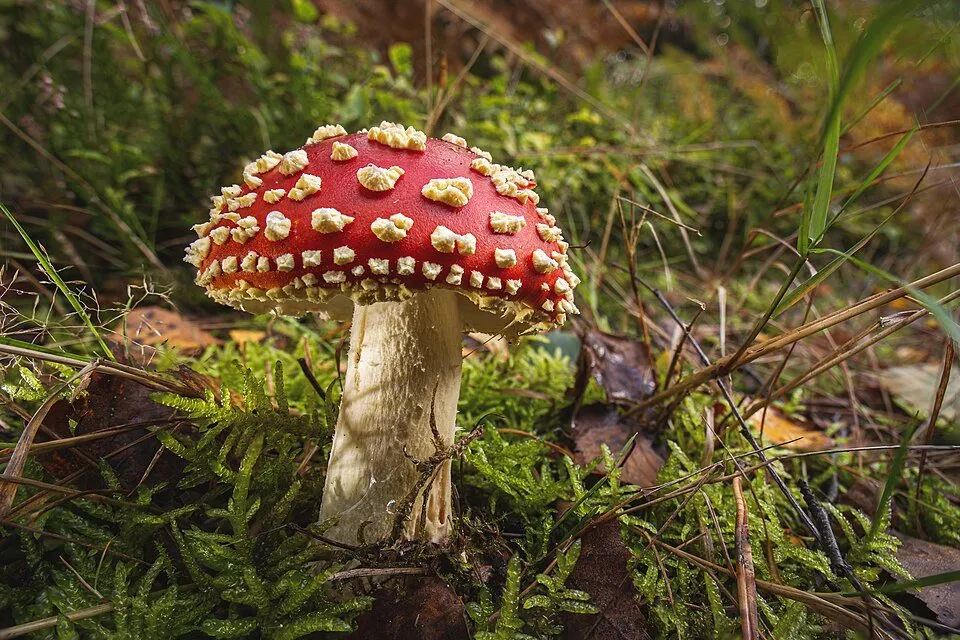
If you ask someone to draw a fairytale mushroom, they’ll likely sketch a bright red cap with white spots. This iconic toadstool is called Amanita muscaria, or fly agaric and appears in popular culture, everywhere from Lewis Carroll’s Alice in Wonderland to the video game Super Mario. But, long before it became a video game power-up item or a garden decoration, this fungus influenced human history, rituals, and myths worldwide.
While today mushrooms are more often perceived as culinary delights or a curious backyard visitor, ancient cultures viewed Amanita muscaria as a very powerful link between worlds. We’ll see that from the tundras of Siberia to ancient Egypt, this red-and-white fungus played a wild role in sacred rites, secret ceremonies, and many academic debates. [2]
Siberian Shamans, Flying Reindeer, and the Real Santa Claus
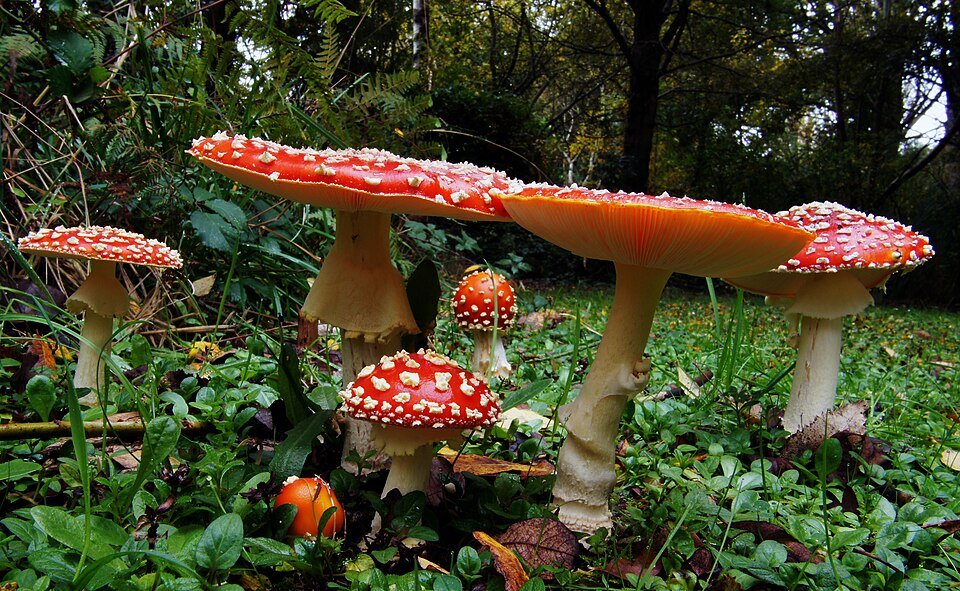
According to Jan Irvin and Andrew Rutajit’s book, Astrotheology & Shamanism: Christianity’s Pagan Roots, it appears some of our modern Christmas traditions trace back to Eastern Siberia, where indigenous tribes like the Koryak, Samoyed, and Tungus practiced shamanism. The local shaman, the community’s healer and spiritual oracle, relied on Amanita muscaria to trigger their out-of-body experiences and healing journeys.
To safely harvest these mushrooms, the shamans picked them from under specific coniferous pines and white birches. The fresh mushroom contains ibotenic acid, which can upset the stomach. But, when it is dried, this acid turns into muscimol which is a much stronger psychoactive compound. So, the Shamans then hung these mushrooms on pine branches to dry in the sun which of course makes the trees look as though it was decorated with ornaments or they placed them in wool stockings above the fireplace to cure.
You can see where this story is going.
When the winter solstice came, shamans would travel and deliver these dried mushrooms to tribal families in a large sack, wearing robes with white fur and dark boots. Since heavy snow often blocked the doors of yurts, the shaman climbed onto the roof and entered through the smoke hole.
Even the myth of flying reindeer has its roots in Siberian culture. Reindeer appear to love Amanita muscaria and seek it out beneath the snow. After eating the mushrooms, they leap and bounce around intoxicated after consuming them. Shamans observed this and spoke of taking spiritual flight alongside their reindeer allies, leading to some of our modern tales of sleighs, flying reindeer, and chimney landings in our Christmas lore.[2]
The Divine Soma of the Rig Veda
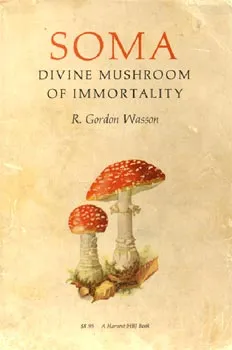
Long before modern debates over entheogens, Vedic poets praised a mysterious substance called Soma. In the Rig Veda, one of humanity’s oldest sacred texts, Soma is described as a miraculous plant without roots, leaves, or flowers that is ‘clothed in red’ and grants ecstatic experiences and immortality.
In 1968, R. Gordon Wasson who was an ethnomycologist (mushroom scholar) and former J.P. Morgan vice president proposed that the legendary Soma was actually Amanita muscaria and not an alcoholic brew or mountain herb. He pointed out that the Rig Veda describes Soma as having a golden-red head, lacking roots and flowers, and being found on high mountains. His work reshaped previous understanding of ancient Indo-Iranian spiritual traditions and their connection to sacred mushrooms.
Pharaohs, Pyramids, and the Egyptian “Plant of Life”
While Siberian tribes used Amanita muscaria in winter, ancient Mediterranean cultures had their own rituals involving this sacred fungus. In the 1950s, Dr. Andrija Puharich explored ancient Egyptian texts and trance writings about a figure named Ra Ho Tep.
These texts referenced a sacred entity called AAKHUT, meaning ‘golden plant,’ the ‘red crown,’ or the ‘plant of life’. Ancient inscriptions described this plant as containing red juice that could separate the soul from the body, allowing initiates to navigate the afterlife realm known as the Tuat.
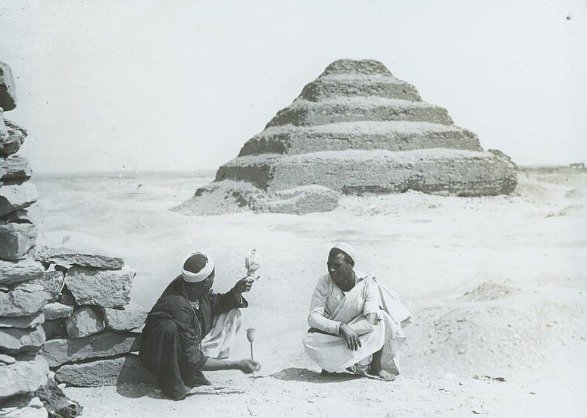
Evidence suggests these rites were closely guarded secrets in early Egypt. During the IIIrd Dynasty, Pharaoh King Zoser, guided by his high priest Imhotep (the architect of the Step Pyramid), incorporated mushroom symbolism into the secret HEB-SED ceremony. This ceremony tested the pharaoh’s abilities to prove his divine power with extreme physical tests and spiritual trials. Since Amanita muscaria didn’t grow well in Egypt, royal priests imported it from cedar and oak forests in Lebanon and the Amanus Mountains in Syria. [1]
Swaddling Clothes, Easter Eggs, and the Holy Grail
Beyond courts and yurts, Amanita muscaria’s growth cycle resembles key religious symbols. When it first appears, the mushroom is covered in a white coating, resembling a white egg. In spring fertility rites, tribal members would send children into forests to find these ‘white eggs,’ an early version of the modern Easter egg hunt. As the mushroom matures, the white veil tears to reveal the bright red cap, like a newborn wrapped in swaddling clothes.
When fully grown, the cap flattens before curving upward, forming a cup. Dew collects inside this cap, turning dark red as it leeches out pigments and compounds. Ancient practitioners could drink this liquid, linking it to the legend of the Holy Grail and the idea of sacred blood from a divine cup.
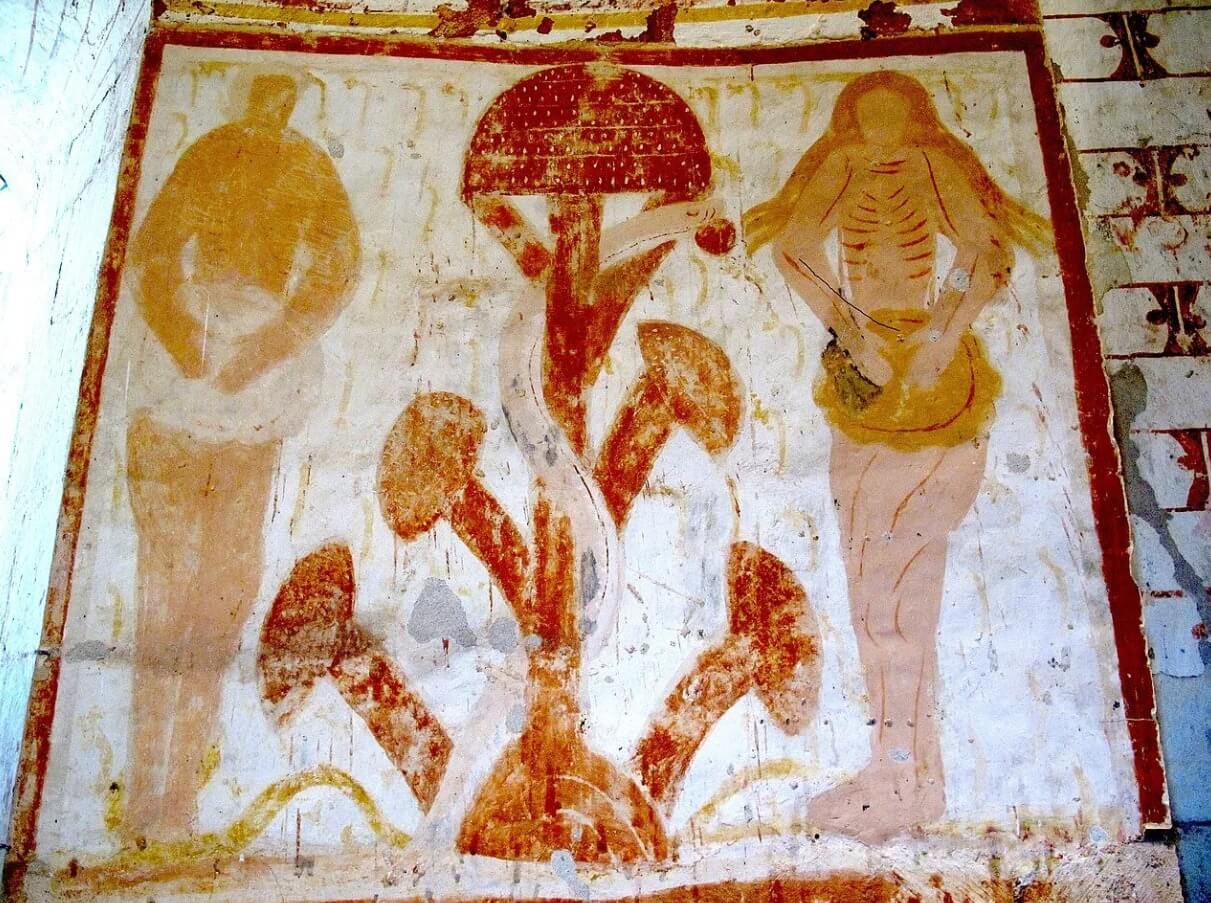
Mushroom imagery also appears in medieval Christian art. A well-known fresco from 1291 CE at the Plaincourault Chapel in France depicts the Tree of Knowledge in Eden. Instead of an apple tree, it shows a giant Amanita muscaria mushroom wrapped by a serpent, positioned between Adam and Eve. [2]
The 1970 Controversy That Rocked Academia
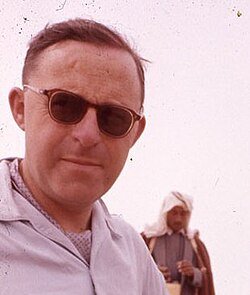
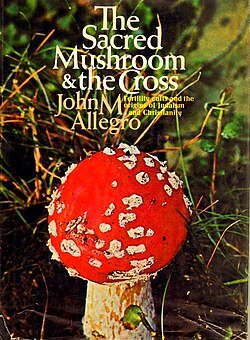
In 1970, the link between sacred mushrooms and ancient texts sparked a major scandal. John Marco Allegro, a brilliant Oxford-educated philologist and the only non-Christian on the Dead Sea Scrolls international translation team, published a bombshell book titled The Sacred Mushroom and the Cross.[3]
Allegro argued that ancient Near Eastern religions and early biblical texts contained hidden references to ancient mushroom worship. He suggested many biblical names and stories were designed to protect secret mushroom knowledge.
The backlash was swift. Other scholars and church officials tried to discredit Allegro, impacting his reputation and career. In later years, though, researchers and ethnomycologists began to recognize the value of his insights into ancient entheogenic traditions and sacred symbols.
From Siberian shamans crossing snowy tundras, Vedic poets singing to Soma, Egyptian pharaohs asserting their divine rule, and medieval artists hiding symbols in chapel walls, Amanita muscaria is a very intriguing natural catalyst in human cultural history.
For more information
Check out Amentara for resources on Amanita muscaria.
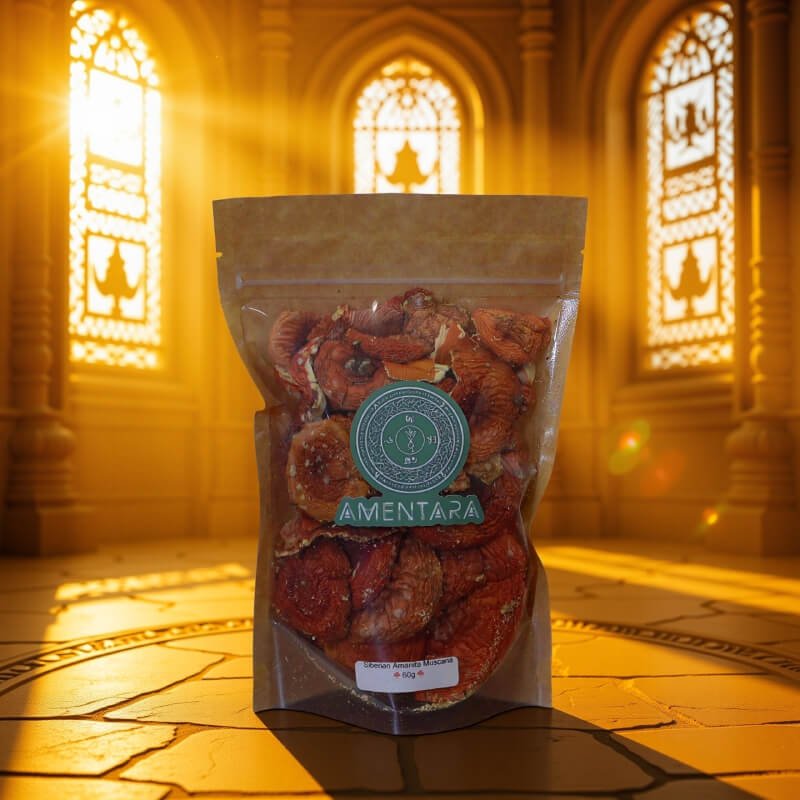
Affiliate disclosure: We are an Amentara affiliate, so purchases made through this link may earn us a small commission at no extra cost to you.
Resources & Historical References
1. Puharich, Andrija. The Sacred Mushroom: Key to the Door of Eternity. Doubleday & Company, 1959 / 1974 edition. (Egyptian hieroglyphic research, Ra Ho Tep trance records, AAKHUT hieroglyphs, and IIIrd Dynasty HEB-SED royal rites).
2. Irvin, Jan, and Andrew Rutajit. Astrotheology & Shamanism: Christianity’s Pagan Roots. Gnostic Media, 2006. ( Siberian shamanic traditions, Santa Claus & flying reindeer folklore, mushroom growth stage iconography, Easter egg/swaddling clothes origins, Plaincourault Chapel frescoes, and John Allegro re-evaluations).
3. Allegro, John Marco. The Sacred Mushroom and the Cross. Doubleday & Company, 1970. ( philological links between Sumerian roots, Near Eastern fertility cults, Dead Sea Scrolls context, and psychoactive mushroom allegories).
4. Wasson, R. Gordon. Soma: Divine Mushroom of Immortality. Ethno-Mycological Studies, No. 1. Harcourt Brace Jovanovich, 1968. / Journal of the American Oriental Society, Vol. 91, No. 2, 1971. (the identification of Vedic Soma as Amanita muscaria, described in the ancient Rig Veda as ‘clothed in red’ and conferring immortality).
“Muscimol as a treatment for nerve injury-related neuropathic pain: a systematic review and meta-analysis of preclinical studies.” PMC. https://pmc.ncbi.nlm.nih.gov/articles/PMC10551397/
“Study of the Biology, Medicinal and Therapeutic Properties of Amanita muscaria.” Kuwait Scholars Publisher. https://www.kspublisher.com/articles/675/
If this free archive of Neville Goddard’s lectures has helped you on your journey, consider helping keep it alive for others.
Support Cool Wisdom Books: Donate via Ko-fi.
Frequently Asked Questions
Is Amanita muscaria poisonous?
The fresh Amanita muscaria mushroom contains ibotenic acid, a neurotoxic compound. When dried though, much of this acid converts into muscimol, a more potent psychoactive compound. This isn't a mushroom to forage and eat casually. Historical use by shamans had careful preparation passed down through generations. Some cultures use it as food after careful preparation.
Is the Santa Claus and magic mushroom connection real?
It's a genuine anthropological theory, not settled fact. Researchers have argued the case seriously. It's one of the most compelling versions of "where did this tradition really come from," even if it's still debated.
What is Soma, and is it really this same mushroom?
Soma is the divine, immortality-granting drink described in the ancient Rig Veda. In 1968, ethnomycologist R. Gordon Wasson proposed that Soma was Amanita muscaria, pointing to descriptions of it as "clothed in red." It remains one of the most influential theories in the field, though Vedic scholars are divided on it.
Is there scientific research into Amanita muscaria's therapeutic potential?
Yes, and it's a growing area of study muscimol has been researched for anxiety, neuropathic pain, sleep, and seizures. That said, this research is currently limited to preclinical and animal studies rather than human clinical trials, so it's still early days compared to something like psilocybin, which already has clinical trials underway.