
14 Sep The British Library Records That Solved the Mystery of Neville’s Mentor: The “Old Scotsman” is Arthur Lipscombe Begbie
Original Archival Research © 2026 Cool Wisdom Books. All rights reserved.
Please consider donating a coffee, to continue this research

Neville Goddard’s mysterious “old Scotsman” mentor has finally been identified as Arthur Lipscombe Begbie (1852 to 1935), a retired mining engineer and spiritualist from Hammersmith, London. Thanks to a researcher in England who traced the archival records of Arthur’s son, Matthew Begbie, we can officially confirm Arthur is the man who introduced Neville to mysticism in 1925 and gave him the esoteric books that sparked the foundation of his later teachings.
The Breakthrough at the British Library
In his lectures, Neville spoke of a retired mining engineer he met in London in 1925; in “No Barrier But Self” he tells us:
“I met an old Scotsman who told me that my attitude of mind determined my life. That I need not be enslaved by life but could control my future by my present thinking. This idea intrigued me. I was fascinated by the thought that, in spite of my limited education and background. Seeing my interest, this gentleman gave me some twenty or thirty books. These I read from cover to cover, as I was hungry for the knowledge I found there.”
In the lecture “The Maker and the Maker of Things”, he goes on to say:
“I wasn’t aroused until I went to England. In 1925 I met an old Scotchman who was interested in certain mystical subjects and he read the Bhagavad-Gita and The Light of Asia and these lovely things to me, and then he gave them to me. Well, he inflamed…he touched a little wick within me so when I came back to America four months later, I was so moved by all that I had heard and read in the interval that I went wild.”
A few months ago, we examined a few possible candidates, the spiritualist author Arthur Findlay and the popular writer Harold Begbie. But the pieces didn’t fit and neither candidate had a son named Matthew.
Neville introduced us to Matthew in his lecture, “Believe Him In”:
“I said to my friend, who was my age and whose name was Matthew [B], ‘Matt, why don’t you show some interest in your father’s philosophical approach to life?’ His father was then what I am today, fifty-eight years old. Well, when you are twenty and your father is fifty-eight, he looks like Methuselah. And so he said to me, ‘Well, Father’s an old man. He’s retired.’ He’s a mining engineer, and he’s retired. So he and his wife lived in a very small, modest little home in Hammersmith. Matt said to me, ‘Let me live first. Let me make a million. Let me earn some money and stand on my own feet before I become interested in what my father today finds so interesting.”
“But after four months in London, I returned to New York City, and then a few months later Matt went off to India in the service of some tea company. And three months later, Matt died.”
Then came a series of events, a “bridge of incidents” as Neville would say, that unraveled the mystery.
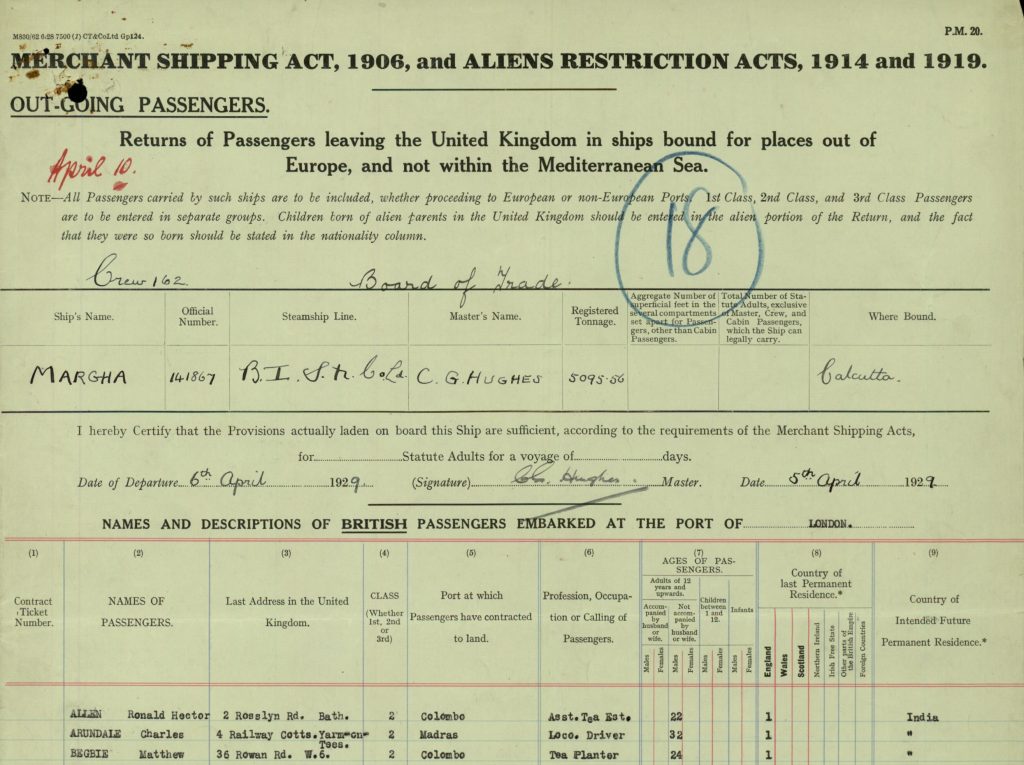
It all began with an email from a researcher in London who took a trip to the British Library. While he was there digging through the shipping manifests, census records, and trade directories, he found a 16-year-old apprentice tea broker named Matthew Stirling Begbie and followed his paper trail across the ocean to the tea gardens of India. Working backward, he discovered Matthew’s father.
His father’s name was Arthur Lipscombe Begbie.
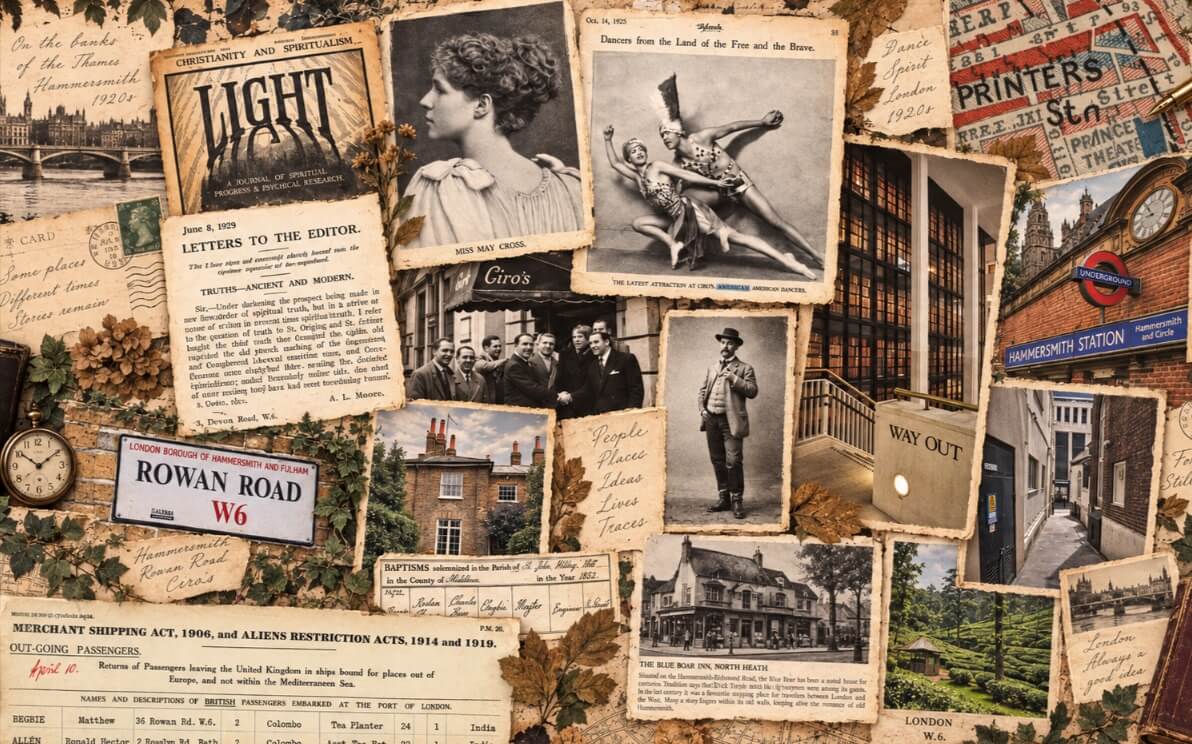
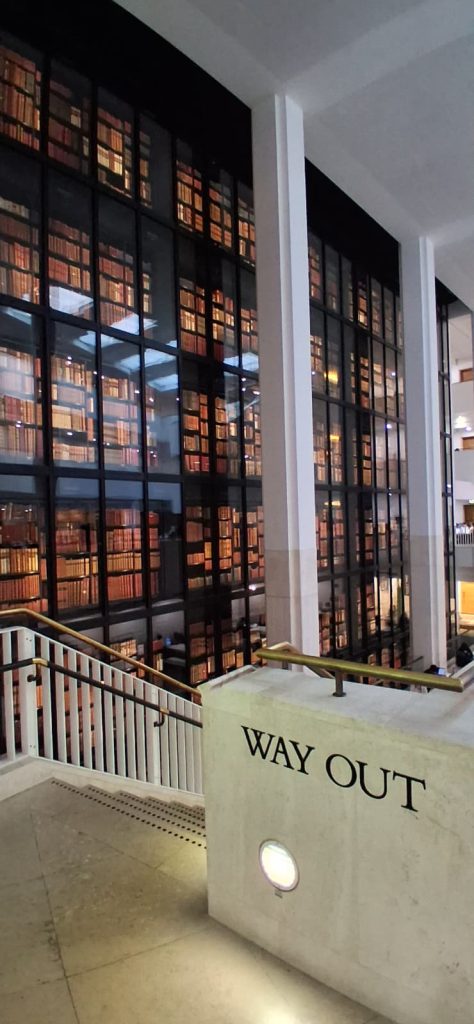
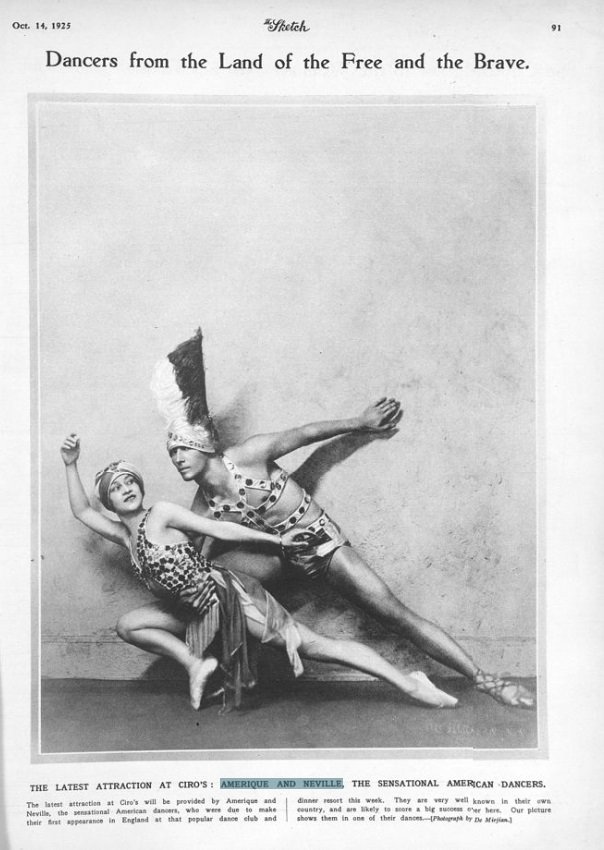
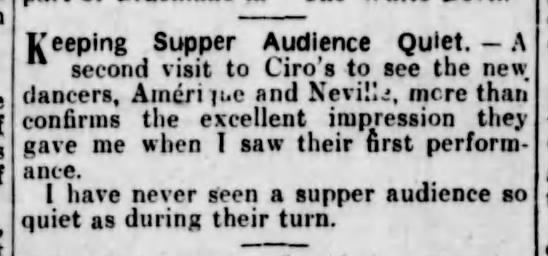
He took us on a wonderful tour of London and sent us photos from the reading rooms of the British Library, the site of Ciro’s, the Orange Street jazz club where a young Neville Goddard danced with his partner Amerique in 1925. Later he travelled westward to the quiet, red-brick terrace of Rowan Road in Hammersmith, where Arthur and his wife May lived, and finally to Elm Bank Gardens in Barnes, the riverside street where young Matthew was born.
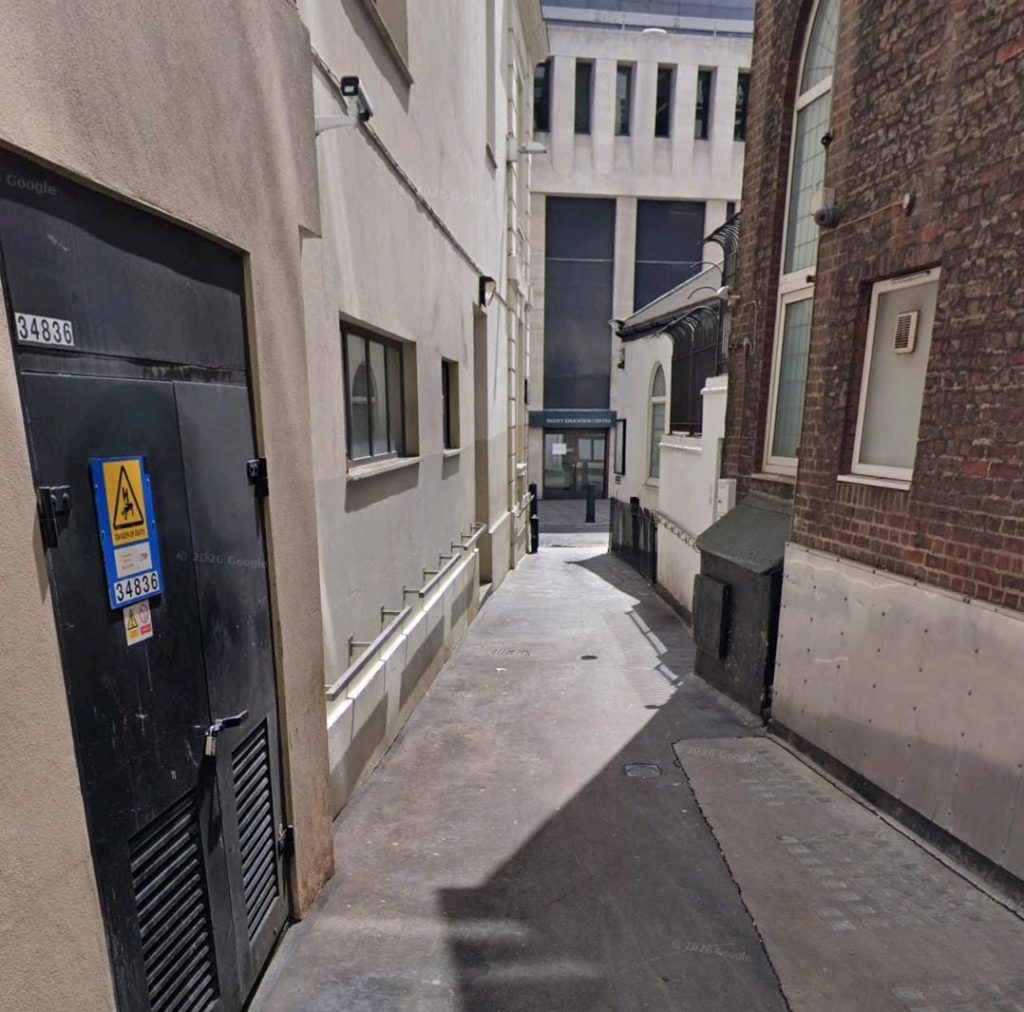

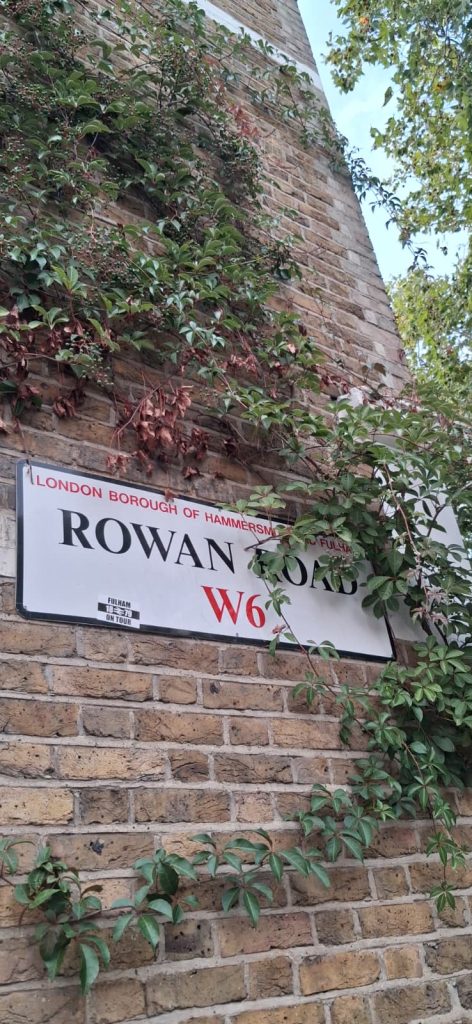
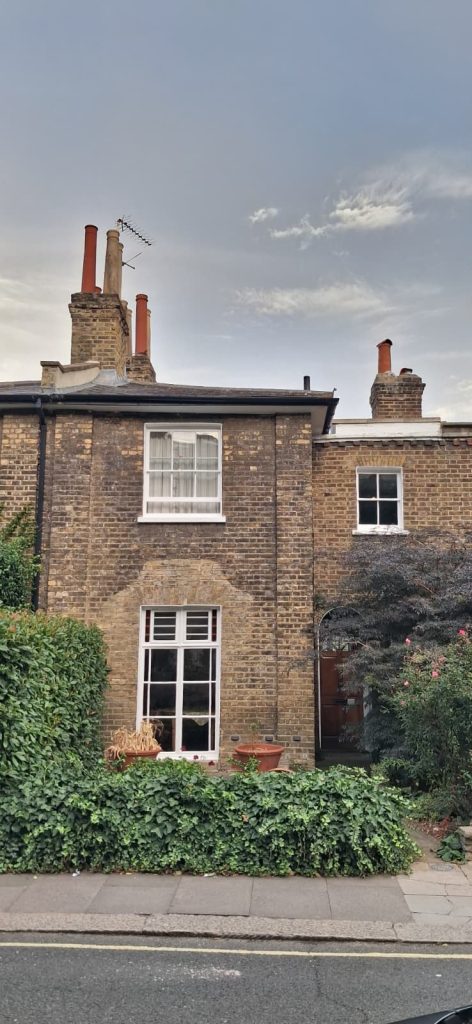
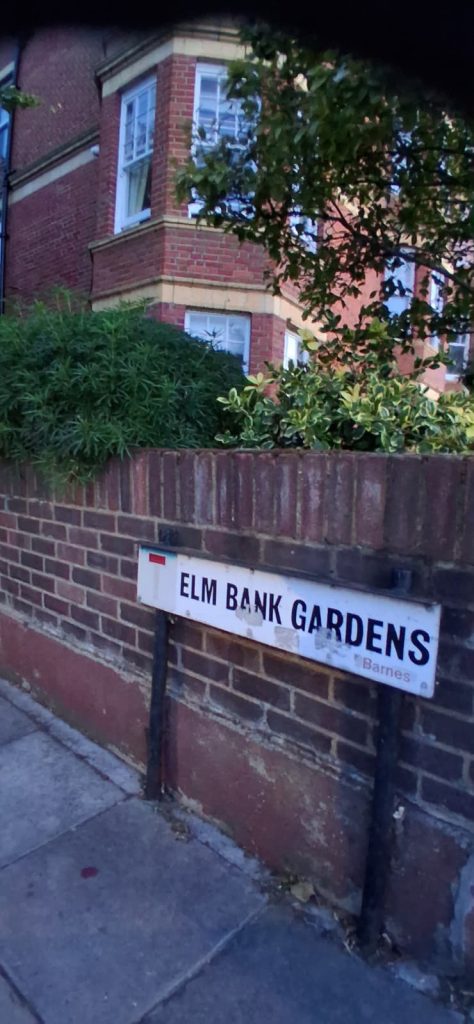
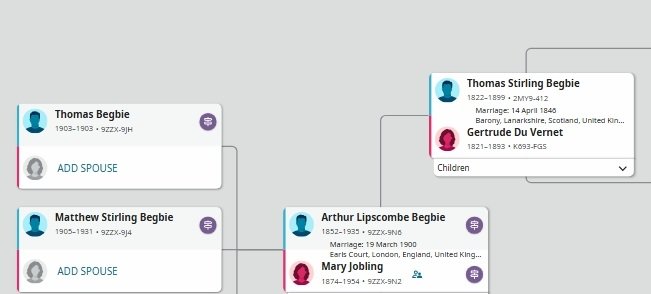
Now with Arthur’s full name, we pulled up the family tree in genealogical records and found that Arthur Lipscombe Begbie and Edward Harold Begbie (one of the candidates we previously considered) were fourth cousins. Both were great-great-great-grandsons of Alexander Begbie and shared the same Scottish lineage that traces back to Haddingtonshire, Scotland, even though both men were born in England, Arthur in Notting Hill, Middlesex (1852) and Harold in Suffolk, England (1871).


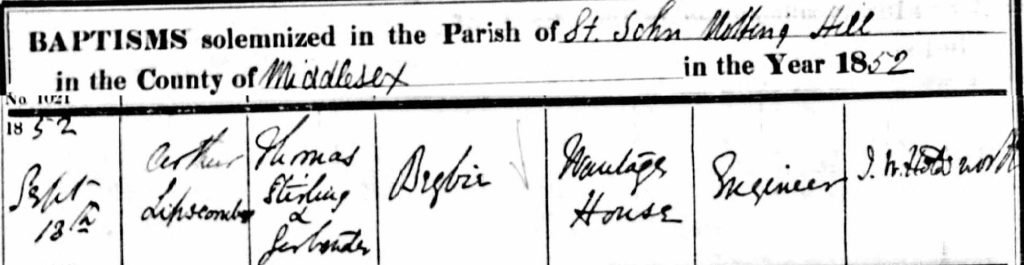
Arthur Lipscombe Begbie – The “Hanging Judge” and the Lost Fortune
Arthur Lipscombe Begbie was born on June 11, 1852, in Notting Hill, Middlesex, England. He was the son of Thomas Stirling Begbie, a merchant and shipowner, and his wife Gertrude. By 1861 the family was living at 160 Ladbroke Road, Kensington, where eight-year-old Arthur was recorded as a scholar. He was later educated at Harrow School (The Grove), which he left in 1867. By 1871, at the age of eighteen, he was living as a student boarder at Boghall Farm in Lasswade, Midlothian, Scotland.
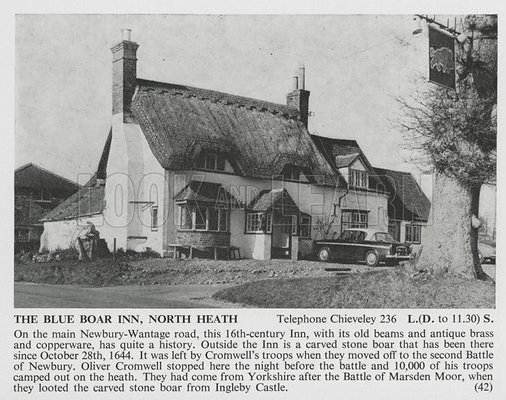
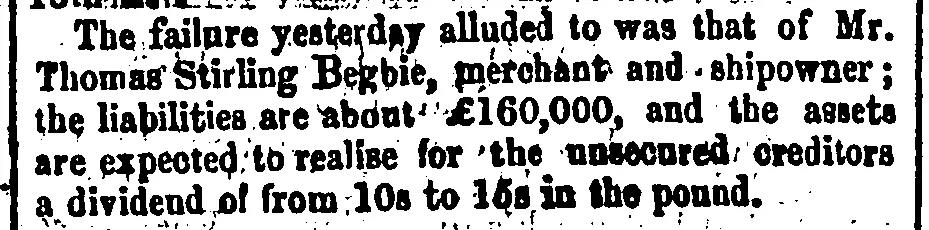
Arthur grew up in the shadow of a complicated financial collapse. His father, Thomas Stirling Begbie, had a massive insolvency in 1865, some records cite a £160,000 bankruptcy. Thomas’s financial ruin drained the family wealth as well and cost his own father £4,000. This forced the sale of the historic family estate in Berkshire, North Heath Farm. This sprawling property even included a famous 16th-century local landmark called the Blue Boar Inn, named after a blue stone boar left chained to a stump by Oliver Cromwell before the Second Battle of Newbury. (This pub still operates in the Berkshire countryside under the name The Crab and Boar).
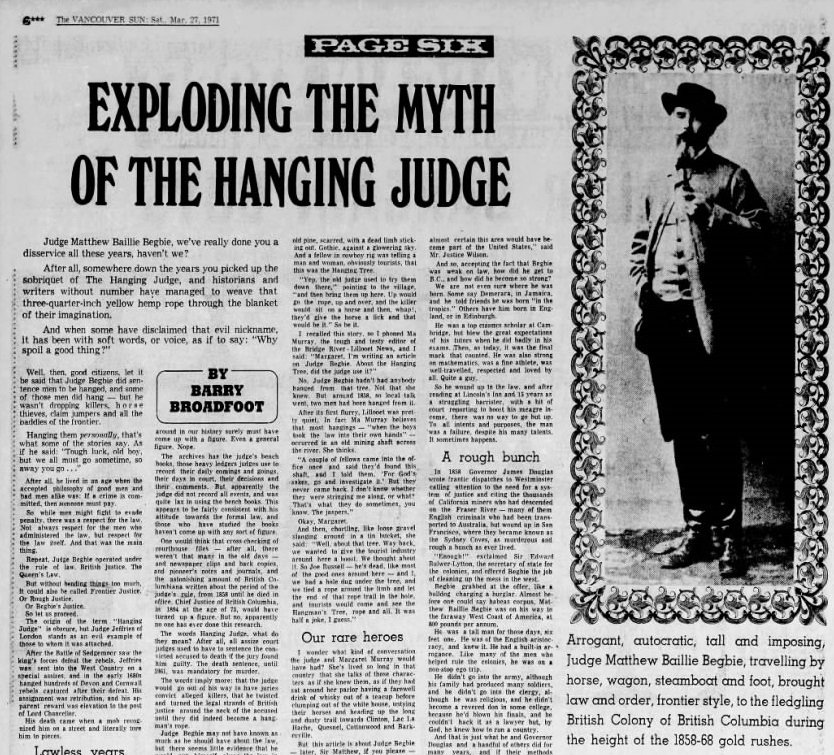
The true giant of the family though, was Arthur’s uncle, Sir Matthew Baillie Begbie, the first Chief Justice of British Columbia. Sir Matthew had a reputation for ruling with an iron fist on the Canadian frontier and was known historically as “The Hanging Judge.” It was Sir Matthew who cleaned up the family’s financial wreckage in England, even paying £3,000 out of his own pocket to rescue his sister’s trust fund after his brother Thomas’s business failures.
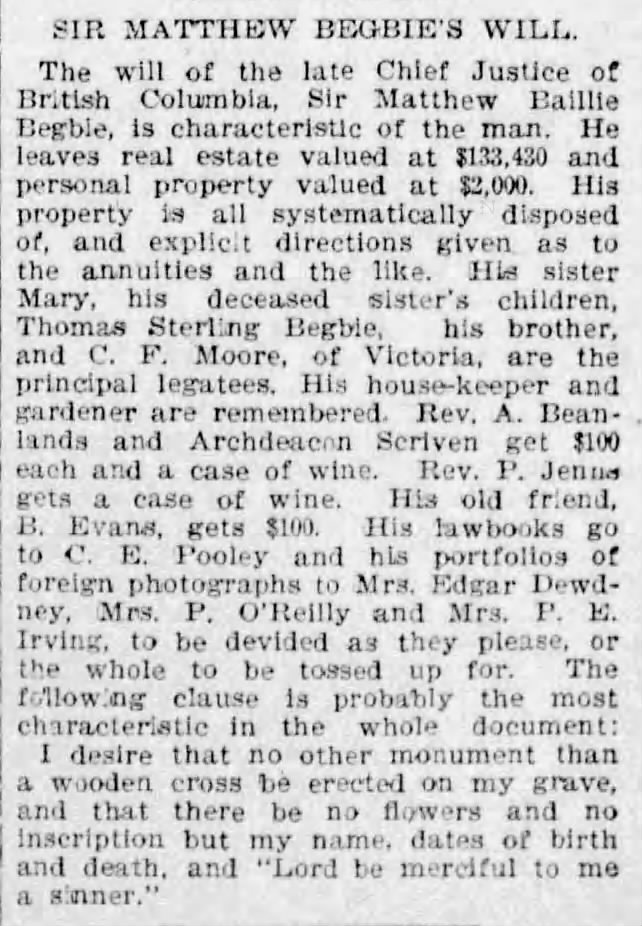
Later, Sir Matthew’s death in 1894 cast a financial shadow on Arthur’s life, as we will see during Arthur’s highly publicized divorce court battle in the late 1890s. Lawyers would note that Arthur was a man who “expects to fall heir to a big fortune in a few years.” Chief Justice Sir Matthew Baillie Begbie did have an estate valued at over $133,000 at his death, and Arthur’s father, Thomas Stirling Begbie, appears to have received some of his brother’s estate in 1894 but following Thomas Stirling’s death on November 10, 1899, Letters of Administration were granted in London on December 14, 1899, to his daughter, Gertrude Miriam Julia Campbell, with his estate sworn at £605 1s. 8d..
What is known is that Arthur worked as a consulting mining engineer and lived in terrace houses at 36 Rowan Road, Hammersmith, and later 8 Byfield Gardens, Barnes. When Arthur passed away in 1935, his own modest estate was sworn at just £258 and left to his second wife, May.
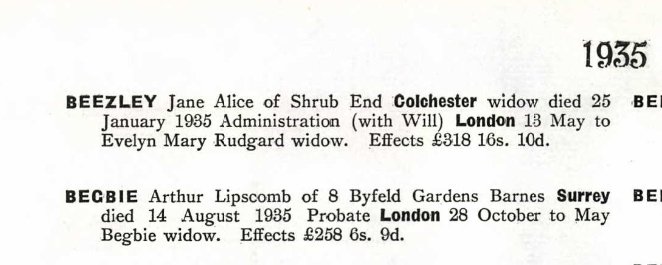


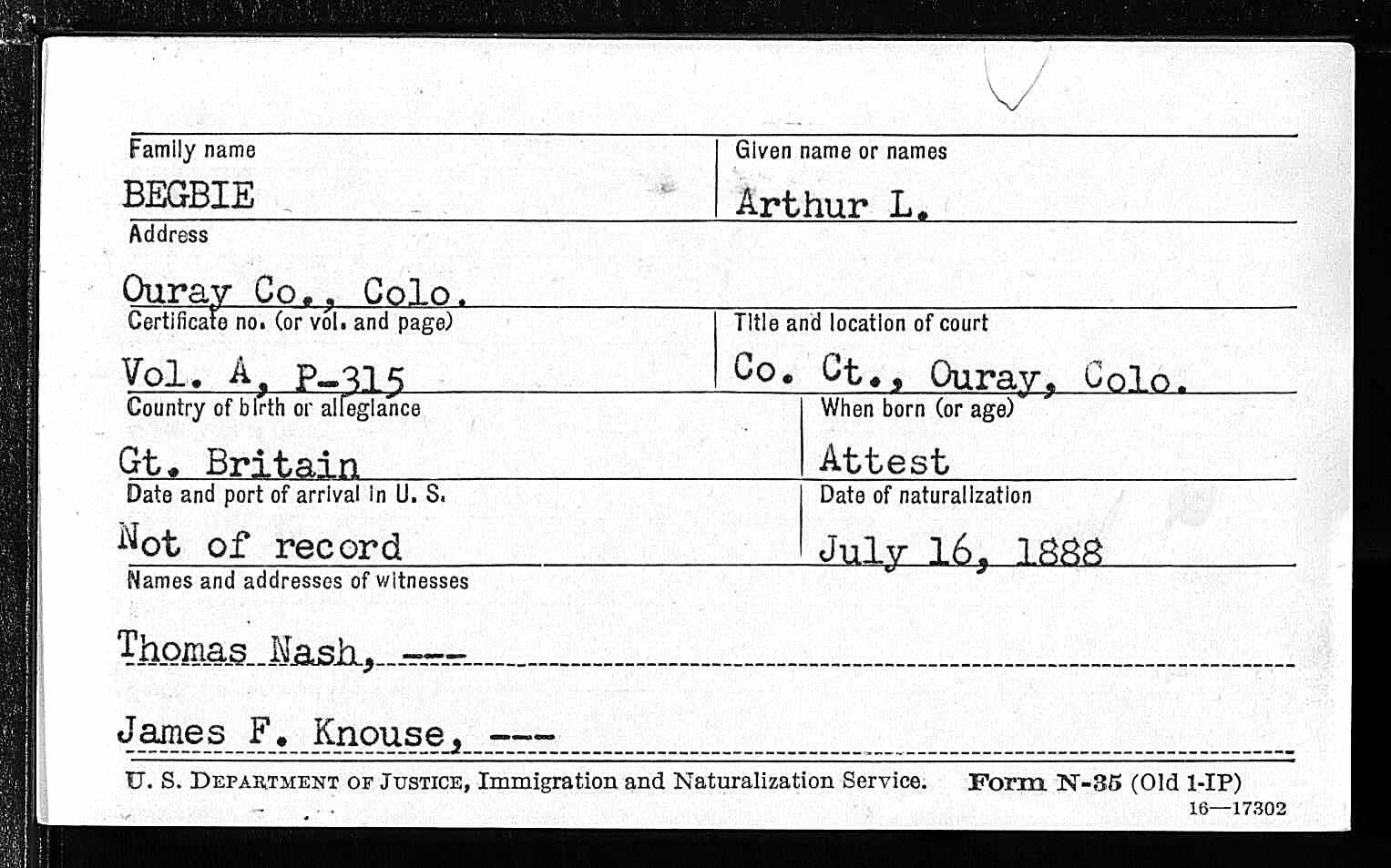
The Wild West (1878–1896)
Arthur left London on the SS Australia for the United States in October 1878. His U.S. passport application stated he was 5 feet 11 inches tall, with a high forehead, bluish-grey eyes, and a sharp, square chin. He settled in the mining camps in the mountain town of Ouray and worked as a mining engineer and superintendent.
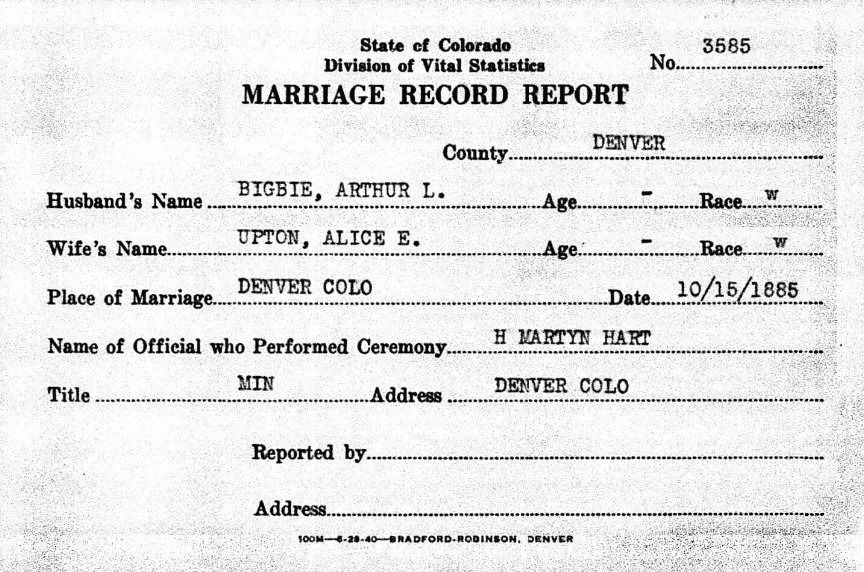
In Colorado, Arthur remembered a young woman he had met briefly in England seven years prior at a family event. Her name was Alice Eliza Upton, and she was the daughter of a Shropshire clergyman. He wrote to her with a sudden marriage proposal. Alice accepted the proposal and shipping records confirm Alice was aboard the SS Aurania, arriving at New York on October 12, 1885, bound for Colorado. On October 15, 1885, Arthur met her at the train depot in Denver where they immediately went to be married by the Rev. H. Martyn Hart.
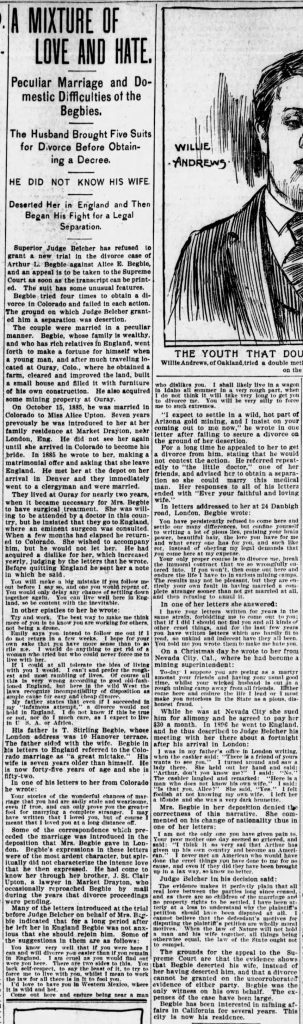
Alice fell ill and required surgery two years later, and Arthur took her back to England for treatment. Arthur returned to Colorado alone and refused to let her follow him. From his mountain cabin, Arthur began a long psychological campaign to have Alice grant him a divorce.
“You will make a big mistake if you follow me. I don’t want you… I prefer the rough life of a cabin in the mountains. Of course all this is very wrong according to good old-fashioned England, but here in the wild West the laws and customs are of a freer disposition…”
When Alice refused to let go, Arthur tried to terrify her by threatening to drag her into the most inhospitable corners of the frontier. He tried to secure a divorce in Colorado four separate times and failed. He wrote to her:
“I shall likely live in a wagon in Idaho all summer in a very rough part… I do not think it will take very long to get you to divorce me.”
“I expect to settle in a wild, hot part of Arizona gold mining, and I insist on your coming out to me now.”
Despite this Alice responded to every letter with unconditional devotion and signed her letters: “Ever your faithful and loving wife, Alice.”
The situation reached epic movie scene proportions during a brief trip Arthur took back to England. Alice tracked him down to a dinner gathering. When she held out her hand and pleaded, “Arthur, don’t you know me?” Arthur stared at his own wife and replied flatly, “No, I don’t know you… Is that you, Alice?”
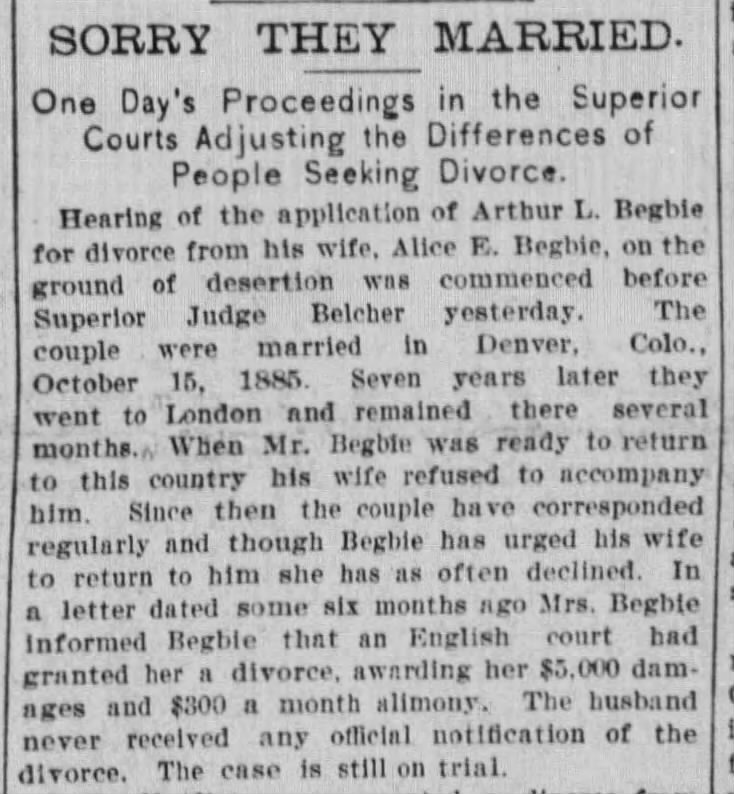
She had changed her hair color, but nonetheless their divorce proceedings did become content for interesting newspaper articles. Headlines like “A Mixture of Love and Hate: Peculiar Marriage and Domestic Difficulties of the Begbies” and sub-caption “The Husband Brought Five Suits for Divorce Before Obtaining a Decree – He Did Not Know His Wife.”
In 1896, Arthur moved to San Francisco and filed his fifth divorce petition.
This time, the trial became very public. Alice’s attorneys read Arthur’s letters aloud in court. Though Superior Judge Belcher admitted Arthur’s letters were “unkind,” he ruled that because all mutual love was dead, the marriage should be dissolved. Arthur was granted his divorce on the grounds of “desertion” because Alice had failed to join him in his shifting frontier homes.
Alice returned to London, and sadly died three years later in Bayswater on November 26, 1899 and left an estate of £861 15s. 10d. (resworn at £1,719 1s.) to her brothers.
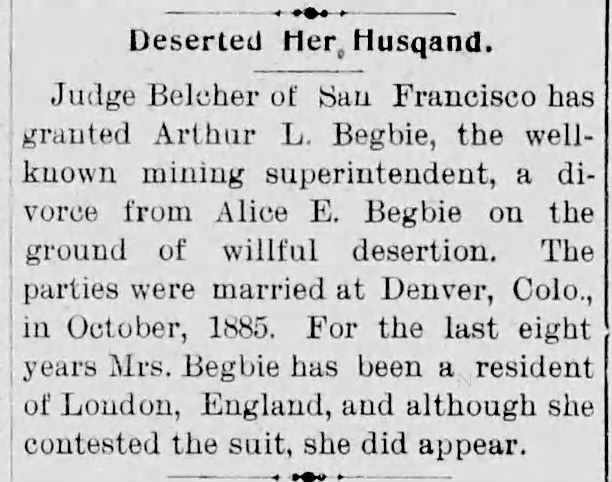
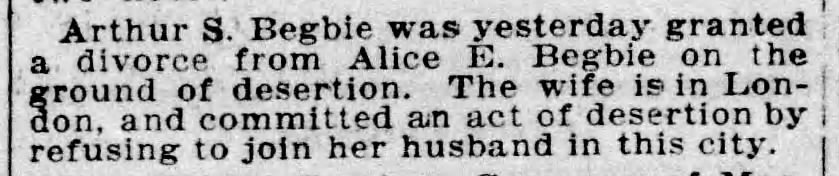
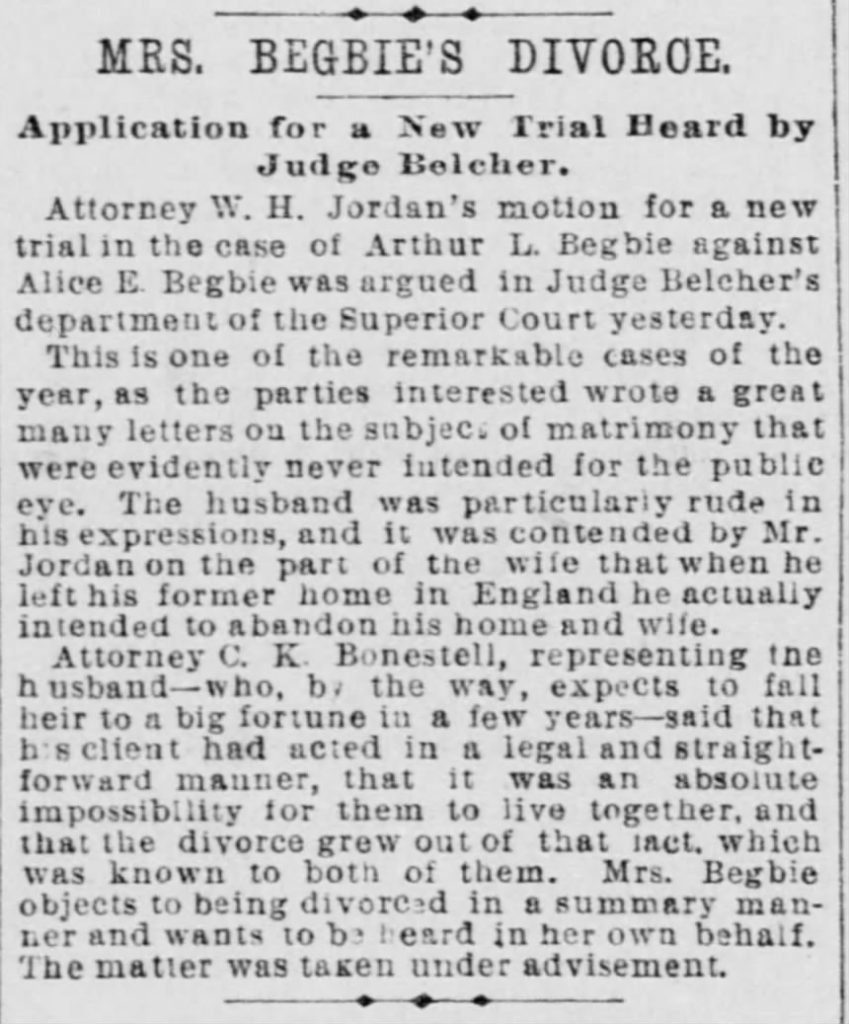


Less than four months after her death, on March 19, 1900, Arthur married his second wife, Mary “May” Jobling, the daughter of a fellow mining engineer, Mark Ernest Jobling.
May Cross and the Ghost of Svengali
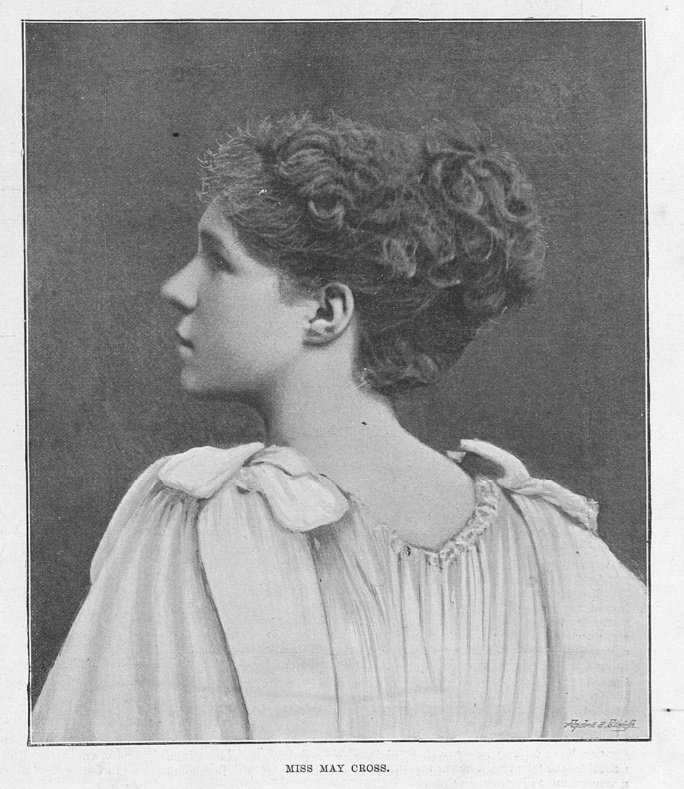
Arthur’s second wife, Mary “May” Jobling (born May 22, 1874), brought a vibrant and more bohemian breeze into his life. She was the daughter of Emily Cross, a celebrated English actress and singer, and Mark Ernest Jobling, a Fellow of the Geological Society and mining engineer and an extraordinary athlete who won over 75 trophies.
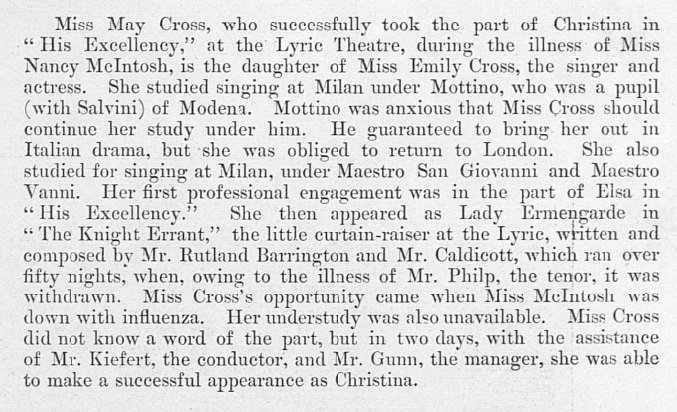
May grew up immersed in the dramatic arts. Her mother, Emily, took her daughters to Italy to provide them with a classical “Italian” musical education, and May studied classical opera in Milan under Mottino (a star pupil of the legendary tragedian Modena alongside Salvini). Mottino was so captivated by her rich voice that he guaranteed to launch her in Italian grand drama, but she was returned to London. She completed her training under Maestro San Giovanni and Maestro Vanni in Milan.
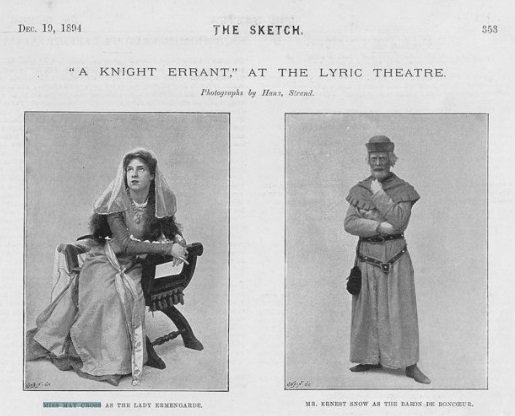
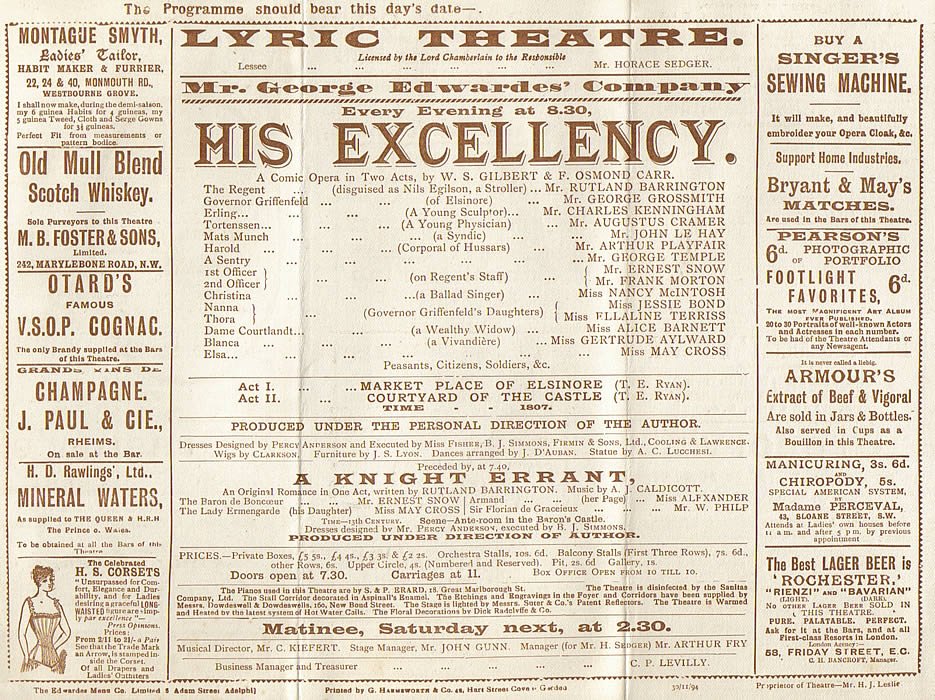
May Cross had her first professional engagement playing Elsa in W. S. Gilbert’s (of Gilbert & Sullivan fame) comic opera His Excellency at the Lyric Theatre in 1894. Her big break was when the lead soprano, Nancy McIntosh, came down with influenza; May, not knowing a single word of the lead part of Christina (the ballad singer), memorized the entire massive role in just two days with the help of conductor Mr. Kiefert and manager Mr. Gunn, to a spectacular public triumph.
May toured with C. J. Abud’s prestigious theatrical company, starring in the coveted titular role of Trilby opposite Charles Garry’s hypnotic Svengali. In a marvelous stroke of historical irony, May was starring in a play about a sinister, hypnotic mesmerist who manipulated vital energies, years before she would marry Arthur Begbie, a real-life mesmerist practicing vitalist “magnetic healing”!
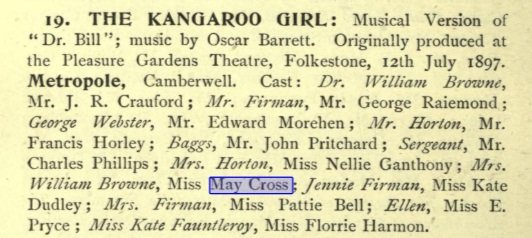
She went on to star in Oscar Barrett’s popular musical comedy The Kangaroo Girl (an adaptation of Dr. Bill), playing the confiding wife Mrs. William Browne.
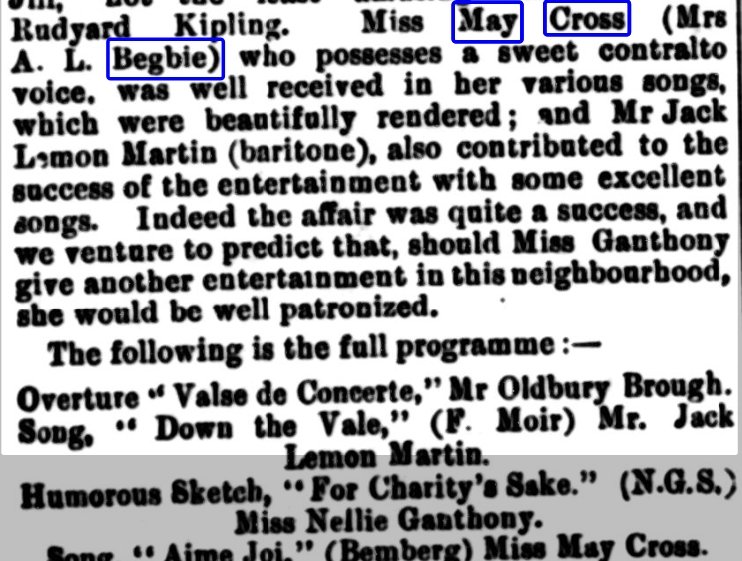
When she married the divorced fifty-year-old Colorado mining engineer in March 1900, it was a fascinating union of frontier survivalist and West End artist. Even as they settled into their modest terrace home at 36 Rowan Road in Hammersmith, West London, May continued to sing, billed on concert programs under both names as “Miss May Cross (Mrs. A. L. Begbie)” possessing a sweet contralto voice.
In March 1903, May gave birth to their firstborn son, Tom, but he died the same day he was born.
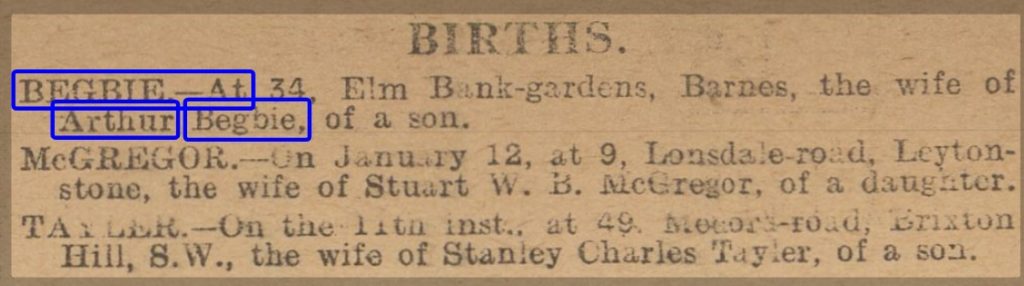
Two years later, on January 11, 1905, a second son was born to them at 34 Elm Bank Gardens in Barnes. This is Neville Goddard’s friend, Matthew Stirling Begbie.

The Seance Room and the Young Dancer (1925)
By the 1920s, mining engineer Arthur appears to have turned his analytical mind from gold and silver to the unseen forces of the spiritual world. Arthur became a passionate writer and practitioner of Spiritualism and vitalism.
In 1925, Neville Goddard arrived in London with Amerique.
Neville tells us in his lecture “God’s Almighty Power”:
“In 1925 I was in London, dancing for one hundred pounds a week. That was $480 U.S. dollars. We had an offer to go to Paris and on to Germany if we would accept payment in marks or francs, but we declined, for they were of no value.”
In his lecture, “The Word” he says:
“…in London in 1925, this wonderful lad—he was six months my junior; in ’25 I was twenty, well, he was twenty-plus—I said, “Are you interested in these things?” He said, “No, certainly not. I’m young, I have to live first.” No matter what I would say to him…I said, “Well, your father gave me this Light of Asia and he gave me all these lovely books, and I can’t tell you, I just can’t tear myself away from them.” “I’m not interested,” he said, “My father is an old man.”
It appears Neville became close friends with young Matthew Begbie, who was then working as a clerk and apprentice to a tea broker in the City of London. Neville soon found himself invited to their Hammersmith home at Rowan Road and there met Matthew’s extraordinary parents.
In his 1963 lecture “Believe Him In“, Neville painted a vivid picture of the household:
“His father was then what I am today, fifty-eight years old… He’s a mining engineer, and he’s retired. So he and his wife lived in a very small, modest little home in Hammersmith.”
Though Neville’s memory of Arthur’s exact age was slightly off (Arthur was actually 73 in 1925), his description of the retired mining engineer in his modest Hammersmith house is an historical match. In his 1963 lecture “Believe Him In“, Neville Goddard accurately identified Arthur Begbie as a retired mining engineer, but in his 1966 lecture “The Word“, he mistakenly merged Arthur’s profession with the classical operatic career of Arthur’s wife, May Begbie (née Jobling, stage name May Cross), misremembering him as a retired opera singer.
It was Arthur who first recognized something in Neville. As Israel Regardie later mentioned in the chapter “Neville” in his book, The Romance of Metaphysics, Arthur “gave Neville his first taste of the spiritualistic seance”, and lent him books on Hermeticism, Eastern philosophy, and ancient mysticism.
So, to reiterate, it was there in the Hammersmith house that a spark lit his spiritual fire:
Neville recalls:
“he read the Bhagavad-Gita and The Light of Asia and these lovely things to me, and then he gave them to me. Well, he inflamed…he touched a little wick within me.”
A House of Esoteric Thinkers
The historical records show that Arthur and May weren’t just hosting casual home seances but were actively writing letters to the editor and publicly defending and questioning theories of the esoteric world in the London press.
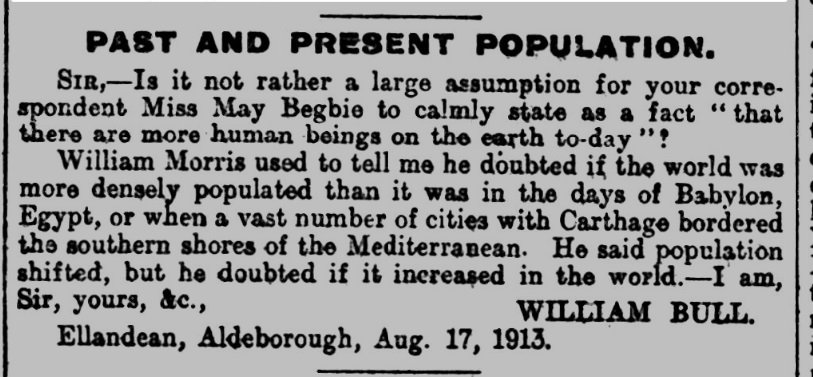
In August 1913, the popular Sunday journal The Referee published a lively public debate surrounding reincarnation. May had written a letter to the editor (printed under her hybrid married-theatrical name “Miss May Begbie” or “May Begbie”) calmly asserting a key spiritualist premise: “that there are more human beings on the earth to-day.”
Her defense provoked a public rebuttal in the August 17, 1913 edition of The Referee by writer William Bull, titled “Past and Present Population”. Bull challenged her by invoking the socialist designer William Morris, arguing that the earth’s population was not actually larger than during the peaks of Babylon, Egypt, or Carthage, but had merely “shifted” geographically.
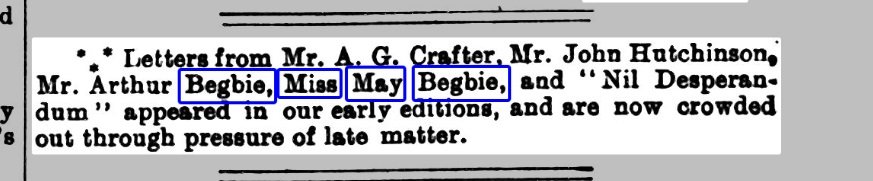
While their original submissions appeared in the newspaper’s early editions, an editorial note in the late edition recorded that letters from “Mr. Arthur Begbie” and “Miss May Begbie” were ultimately “crowded out through pressure of late matter”.
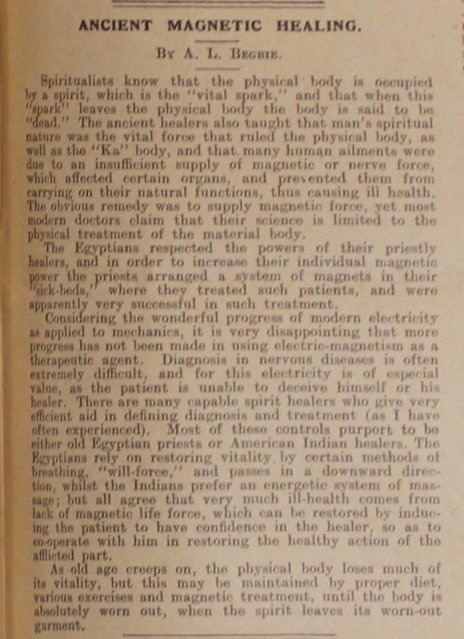
Arthur’s Vitalist Theory (1922)
Arthur, meanwhile, approached the invisible world with the precision of his engineering background. In February 1922, he published a fascinating, detailed essay in Light magazine titled “Ancient Magnetic Healing”. In it, he argued that modern medicine had forgotten the ancient vitalist secrets of “Mesmerism” and the human energy field. He wrote of the human body as a battery of “vital force” or “magnetic fluid,” describing how a healer could use “downward passes” of the hands to cure disease.
Most astonishingly, Arthur revealed that he obtained these techniques directly from his spirit guides, whom he claimed were “Old Egyptian Priests” and “American Indian Healers” who communicated with him during deep trance states.
Here is the text transcribed from the image “Screenshot_6-9-2026_02750_iapsop.com.jpeg”:
ANCIENT MAGNETIC HEALING. By A. L. BEGBIE.
Spiritualists know that the physical body is occupied by a spirit, which is the “vital spark,” and that when this “spark” leaves the physical body the body is said to be “dead.” The ancient healers also taught that man’s spiritual nature was the vital force that ruled the physical body, as well as the “Ka” body, and that many human ailments were due to an insufficient supply of magnetic or nerve force, which affected certain organs, and prevented them from carrying on their natural functions, thus causing ill health. The obvious remedy was to supply magnetic force, yet most modern doctors claim that their science is limited to the physical treatment of the material body.
The Egyptians respected the powers of their priestly healers, and in order to increase their individual magnetic power the priests arranged a system of magnets in their “sick-beds,” where they treated such patients, and were apparently very successful in such treatment.
Considering the wonderful progress of modern electricity as applied to mechanics, it is very disappointing that more progress has not been made in using electric-magnetism as a therapeutic agent. Diagnosis in nervous diseases is often extremely difficult, and for this electricity is of especial value, as the patient is unable to deceive himself or his healer. There are many capable spirit healers who give very efficient aid in defining diagnosis and treatment (as I have often experienced). Most of these controls purport to be either old Egyptian priests or American Indian healers. The Egyptians rely on restoring vitality by certain methods of breathing, “will-force,” and passes in a downward direction, whilst the Indians prefer an energetic system of massage; but all agree that very much ill-health comes from lack of magnetic life force, which can be restored by inducing the patient to have confidence in the healer, so as to co-operate with him in restoring the healthy action of the afflicted part.
As old age creeps on, the physical body loses much of its vitality, but this may be maintained by proper diet, various exercises and magnetic treatment, until the body is absolutely worn out, when the spirit leaves its worn-out garment.
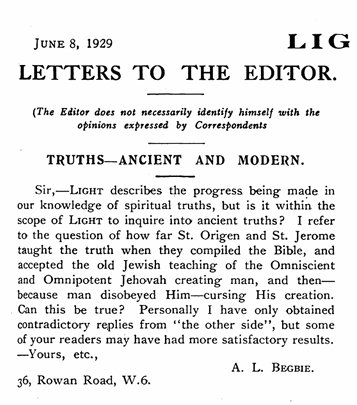
Dialogues with “The Other Side” (1929)
By 1929, Arthur’s mediumship had evolved from healing to deep, challenging theological questioning. In a letter to Light titled “Truths – Ancient and Modern”, written from his home at 36 Rowan Road, Arthur openly detailed his direct seance communications with the spirit world:
LETTERS TO THE EDITOR.
TRUTHS—ANCIENT AND MODERN.
Sir,—LIGHT describes the progress being made in our knowledge of spiritual truths, but is it within the scope of LIGHT to inquire into ancient truths? I refer to the question of how far St. Origen and St. Jerome taught the truth when they compiled the Bible, and accepted the old Jewish teaching of the Omniscient and Omnipotent Jehovah creating man, and then—because man disobeyed Him—cursing His creation. Can this be true? Personally I have only obtained contradictory replies from “the other side”, but some of your readers may have had more satisfactory results.
—Yours, etc.,A. L. BEGBIE.
36, Rowan Road, W.6.
Here was a 77-year-old Arthur and his wife May, sitting in their Hammersmith parlor, actively questioning the orthodoxy of the Christian Bible, calling upon spirits to explain the mysteries of creation, and publicly debating these cosmic secrets in London’s occult journals.
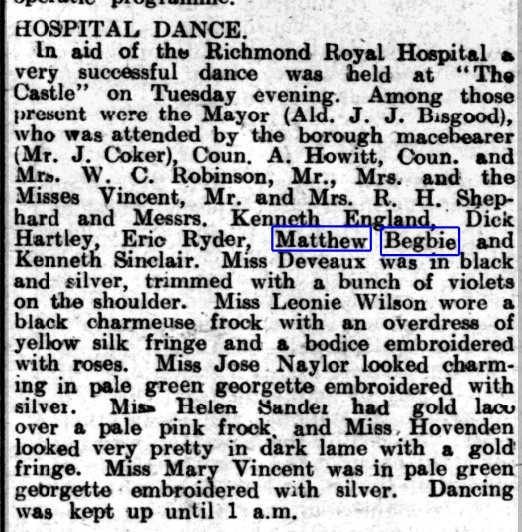
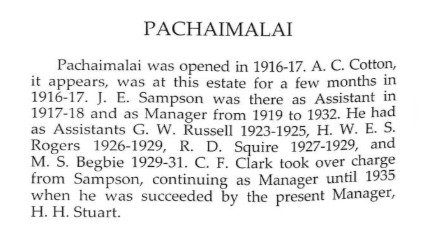

The Tea Planter Matthew
While Arthur and May spent their evenings peering through the veil, their son Matthew chose a resolutely material path. He wanted to see the world, to build a career, and to chase the fortune his father had never quite managed to secure.
He became an apprentice to a tea broker at Harrison & Co. on Rood Lane in London. But Matthew was not just a clerk. On a Tuesday evening in December 1926, Matthew attended the grand charity ball in aid of the Richmond Royal Hospital. Held at “The Castle” (the fashionable Castle Hotel and Assembly Rooms on Hill Street in Richmond, Surrey), the event was a glittering local affair attended by the Mayor and the district’s fashionable youth. There, Matthew spent the night socializing and dancing until 1:00 a.m. a vivid, charming snapshot of a young man fully immersed in the joys of the material world.
In 1929, the 24-year-old Matthew decided to seek his fortune in the East. Just weeks before his departure, the spring 1929 Electoral Register for Hammersmith South recorded him living at the family home under a phonetic typo: “Begbie, Mathey Stirling” (with his father’s middle name likewise misspelled as “Arthur Lepscomb”). It was his very first time being registered to vote as a young adult alongside his parents. But before he could even cast a ballot, his trunks were packed.
On April 6, 1929, the very same year his father was writing to Light about his dialogues with the dead, Matthew stood on the docks of London and boarded the cargo liner SS Margha, bound for Colombo, Ceylon. He listed his occupation as “Tea Planter” and his home address as 36 Rowan Road, Hammersmith.
Just two years after arriving in the hot, humid tea estates of South India, Matthew contracted a sudden, fatal tropical illness.
Neville said in the lecture, “Believe Him In”:
But after four months in London, I returned to New York City, and then a few months later Matt went off to India in the service of some tea company. And three months later, Matt died. He contracted malaria, and Matt was gone from this world. He had to make a lot of money first before he could show any interest in things spiritual. Money was the only thing that to him would symbolize success in his world, not an experience of God but money in the bank or things in his house, or things.
Neville’s memory compressed the timeline, recalling that Matthew departed shortly after 1925 and died three months later, whereas shipping manifests and burial registers show Matthew actually sailed for India in April 1929 and lived there for over two years before his death in July 1931.
On July 28, 1931, Matthew Stirling Begbie died at the Selaliparai tea estate high in the Anamallai Hills of South India at the age of 26. He was laid to rest in Valparai Township by A. Cecil Hall, his passing officially inscribed in the register of the Wesleyan Mission Chapel, Valparai.
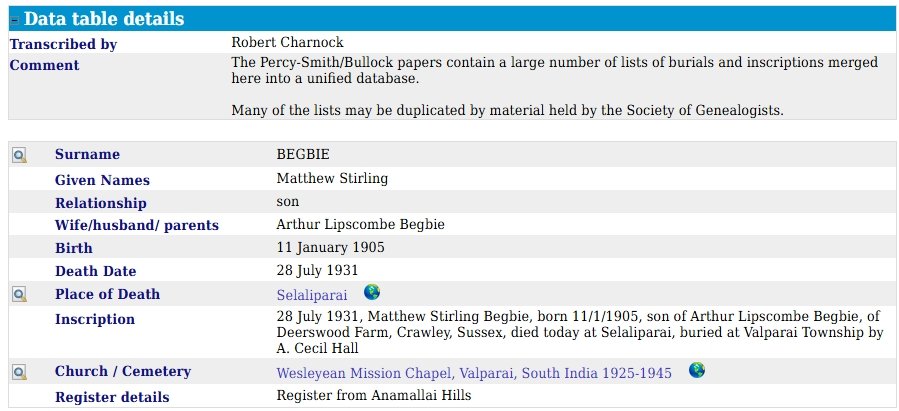
In a poignant detail, the official burial record inscribed Arthur’s residence at the time of Matthew’s death as Deerswood Farm in Crawley, Sussex, which might have been a brief sojourn Arthur and May took to the Sussex countryside after leaving Rowan Road.
After Matthew’s death, Arthur and May eventually left Hammersmith, retiring across the River Thames to Barnes, the very district where Matthew had been born thirty years earlier.
On August 14, 1935, Arthur Lipscombe Begbie died at the age of 83, leaving his modest estate to his wife, May. May lived on for nearly two decades, passing away in Barnes on January 1, 1954.
Arthur’s quiet place in spiritualist history remained hidden and obscured by a simple bibliographic trick of fate.
When combing through historical spiritualist catalogs searching for “Begbie,” one is invariably led down a different path. Most all searches pointed to his fourth cousin, Edward Harold Begbie. Harold was an internationally famous writer of the era whose reporting on the supernatural, especially the legendary “Angels of Mons” during World War I had made him a household name and a constant fixture of spiritualist journals.
Arthur, meanwhile, shielded his private inquiries, writing his articles and letters to Light under an unassuming moniker of “A. L. Begbie”. In doing so, his vitalist healing essays and deep mediumistic dialogues were swallowed by the massive literary shadow of his famous cousin.
Yet, as we peel back those initials it reveals the retired Colorado mining superintendent and his West End star wife’s home in Hammersmith was a vibrant salon where rugged frontier mining tales, Milan-trained operatic melodies, and seance-room dialogues with ancient Egyptian priests collided. And though their son Matthew never lived to see it, the spark that Arthur and May lit in the young dancer Neville Goddard in 1925 went on to set the mystical world on fire.
Original Archival Research © 2026 Cool Wisdom Books. All rights reserved.
Please consider donating a coffee, to continue this research
Reference List: Arthur Lipscombe Begbie Research
Born in London on June 11, 1852, Arthur Lipscombe Begbie was documented as a scholar in Kensington at age 9 (1861) and as a boarding student at Boghall Farm in Lasswade, Scotland, by age 19 (1871).
At age 26 (1878), he emigrated to the United States, subsequently marrying his first wife, Alice Eliza Upton, in Denver, Colorado, at age 33 (1885). He became a naturalized U.S. citizen in Colorado at age 36 (1888) and relocated to San Francisco by age 44 (1896) before being widowed at age 47 (1899). Returning to London, Begbie married Mary Jobling in March 1900, still at the age of 47 (1900).
He continued his career as a mining engineer, traveling between England and the United States around age 49 (1901 to 1902). When Begbie was 50 (1903), his first son, Tom, died on the day of his birth; a second son, Matthew Stirling, was born when Begbie was 52 (1905). He established his residence at 36 Rowan Road in Hammersmith by age 58 (1910), remaining there into his late seventies (1929).
At age 79 (1931), his son Matthew died in India. Begbie died at the age of 83 on August 14, 1935, in Barnes, Surrey, leaving a modest estate to his widow, May.
Genealogical Databases & Online Archives
British Association for Cemeteries in South Asia. “Burial Record: Matthew Stirling Begbie (28 July 1931).” BACSA Biographical Index, Record ID 531490. Accessed September 12, 2026. https://bacsa.ourarchives.online/bin/aps_detail.php?id=531490.
FamilySearch. “Person Details: Arthur Lipscombe Begbie (1852–1935).” FamilySearch Family Tree, Person ID 9ZZX-9N2. Accessed September 12, 2026. https://www.familysearch.org/en/tree/person/details/9ZZX-9N2.
FamilySearch. “Person Details: Matthew Stirling Begbie (1905–1931).” FamilySearch Family Tree, Person ID 9ZZX-9J4. Accessed September 12, 2026. https://www.familysearch.org/en/tree/person/details/9ZZX-9J4.
FamilySearch. “Person Details: Thomas Stirling Begbie (1822–1899).” FamilySearch Family Tree, Person ID 2MY9-412. Accessed September 12, 2026. https://www.familysearch.org/en/tree/person/details/2MY9-412.
FamilySearch. “Person Details: Mary Jobling (1874–1954).” FamilySearch Family Tree, Person ID 9ZZX-9N2. Accessed September 12, 2026. https://www.familysearch.org/en/tree/person/details/9ZZX-9N2.
Sticklepath History. “Mark Jobling: Research Arising from Miners’ Tale Part 3: Exciting News #OnePlaceStudies #Sticklepath.” February 25, 2021. https://sticklepathhistory.family/2021/02/25/mark-jobling-research-arising-from-miners-tale-part-3-exciting-news-oneplacestudies-sticklepath/.
Sticklepath History. “JOBLING Mark Ernest 1844-1921.” Accessed September 13, 2026. https://sticklepathhistory.family/jobling-mark-ernest-1844-1921/.
Kurt of Gerolstein. “A Piratical Maid-of-All-Work.” Kurt of Gerolstein (blog), April 2018. https://kurtofgerolstein.blogspot.com/2018/04/a-piratical-maid-of-all-work.html.
Wikipedia. “Trilby (play).” Wikipedia: The Free Encyclopedia. Accessed September 12, 2026. https://en.wikipedia.org/wiki/Trilby_(play).
Vital & Probate Records
England, Births and Christenings, 1538–1975. Database. FamilySearch (https://www.familysearch.org/ark:/61903/1:1:J7TB-C45 : 5 May 2026). Entry for Arthur Lipscomb Begbie, 1852.
England and Wales, Marriage Registration Index, 1837–2005. FamilySearch (https://www.familysearch.org/ark:/61903/1:1:26S7-V1F : 5 July 2026). Entry for Arthur Lipscombe [Begbie, recorded as] Jobling and May, 1900.
London, England, Church of England Marriages and Banns, 1754–1941. Parish Register, St. Philip, Kensington (Earls Court Road, Kensington and Chelsea). Entry for Mary Jobling and Arthur Lepecombe Begtie [sic], 19 March 1900.
England and Wales, National Probate Calendar (Index of Wills and Administrations), 1858–1995. Entry for Alice Eliza Begbie, death date 26 November 1899.
England and Wales, National Probate Calendar (Index of Wills and Administrations), 1858–1995. Entry for Thomas Stirling Begbie, death date 6 August 1872, Middlesex; probate 13 September 1872.
England and Wales, National Index of Wills and Administrations, 1858–1957. FamilySearch (https://www.familysearch.org/ark:/61903/1:1:W777-ZHN2 : 21 August 2026). Entry for Arthur Lipscomb Begbie and May Begbie, 28 October 1935.
England and Wales, Death Registration Index, 1837–2007. FamilySearch (https://www.familysearch.org/ark:/61903/1:1:QVH2-Q9X4 : 1 March 2025). Entry for Arthur L. Begbie, 1935.
Census & Electoral Records
Census Returns of England and Wales, 1861. Kew, Surrey, England: The National Archives (TNA). Class RG9. Household of Thomas S. Begbie, 160 Ladbroke Road, Kensington. Head: Thomas S. Begbie (39, Shipowner, b. Chelsea); Wife: Gertrude (39, b. Grenville, Canada); children Henry du V. (14), Mary L. (12), Arthur L. (8, b. Kensington), Gertrude M. J. (6), Emily E. S. (4).
Census Returns of Scotland, 1871. Edinburgh, Scotland: General Register Office for Scotland. Entry for Arthur L. Begbie, Boghall Farm, Lasswade, Midlothian.
Census Returns of England and Wales, 1901. Kew, Surrey, England: TNA. Class RG13. Entry for Arthur L. Begbie, Montagne Mansions Hotel, Bloomsbury, London.
Census Returns of England and Wales, 1911. Kew, Surrey, England: TNA. Class RG14, Piece 253, Schedule 355. Household of Arthur Lipscombe Begbie, 36 Rowan Road, Hammersmith, London W.6. Head: Arthur Lipscombe Begbie (58, Consulting Engineer); Wife: Mary Begbie (36); Son: Matthew Stirling Begbie (6).
Census Returns of England and Wales, 1921. Kew, Surrey, England: TNA. Class RG15, Piece 257, Schedules 558–559. Household of Arthur L. Begbie, Rowan Road, Hammersmith, London W.6. Arthur L. Begbie (69); Mary Begbie (47); Matthew Stirling Begbie (16, Apprentice Tea Broker, Harrison & Co., 23 Rood Lane, EC3).
London County Council. Electoral Register, Spring 1929: Parliamentary Borough of Hammersmith, South Division (Polling District S). London: London Metropolitan Archives. Registration for 36 Rowan Road: “Mathey Stirling Begbie,” “Arthur Lepscomb Begbie,” and “Mary Begbie.”
Newspapers & Periodicals (chronological)
“Shipping and Merchant Operations.” Commercial Daily List, March 18, 1865, 3.
“High Court of Chancery: Business of Thomas Stirling Begbie.” London Daily News, April 3, 1873, 7.
“Failure of Thomas Stirling Begbie: Bankruptcy Proceedings.” London Weekly News, July 24, 1875, 25.
“Lyric Theatre: ‘His Excellency’ Production.” Illustrated London News, December 19, 1894.
“Miss May Cross in ‘His Excellency’ at the Lyric Theatre.” Illustrated London News, April 3, 1895, 412.
“Wants a Divorce: Arthur L. Begbie Seeks Divorce From His English Wife.” San Francisco Call, June 28, 1896, 6.
“Concert Notice: Miss May Cross.” Sutton Journal, September 24, 1896.
“Begbie Divorce Suit: Trial Testimony Before Superior Judge Belcher.” San Francisco Call, June 11, 1897, 14.
“Theatrical Notes: Miss May Cross in ‘The Kangaroo Girl.'” London Daily Chronicle, July 21, 1897.
“Theatrical Production: ‘The Kangaroo Girl’ at the Metropole.” Illustrated London News, August 1897.
“Parkhurst Theatre: ‘The Kangaroo Girl.'” Holloway Press, September 10, 1897.
“Begbie Divorce Decree Granted.” San Francisco Call, October 23, 1897, 12.
“Marriages: Begbie–Jobling.” London Evening Standard, March 22, 1900.
“Vocal Concert Review: Miss May Cross (Mrs. A. L. Begbie).” Westerham Herald, November 14, 1903.
“Births: Begbie — Son Born to Mrs. A. L. Begbie.” Illustrated London News, January 14, 1905.
Bull, William. “Past and Present Population.” The Referee (London), August 17, 1913, 4.
“Theatrical and Social Intelligence.” London Press, October 15, 1925.
“Richmond Royal Hospital Charity Ball.” Richmond Herald, December 18, 1926.
“Begbie Family Press Reports.” British Newspaper Archive, September 7, 2026.
Immigration, Shipping & Passport Records
U.S., Passport Applications, 1795–1925. Entry for Arthur L. Begbie: age 49; birth date 11 June 1852; birthplace London, England; residence San Francisco, California; passport issue date 21 February 1902.
Ancestry Institution. Shipping/passenger record image. https://www-ancestryinstitution-com.wikipedialibrary.idm.oclc.org/imageviewer/collections/1174/images/USM1834_46-0535?pId=1426570.
Books & Secondary Sources
Congreve, C. R. T. The Anamallais. Madras, 1941. https://archive.org/details/the-anamallais-crt-congreve-1941/mode/2up?q=Selaliparai+begbie.
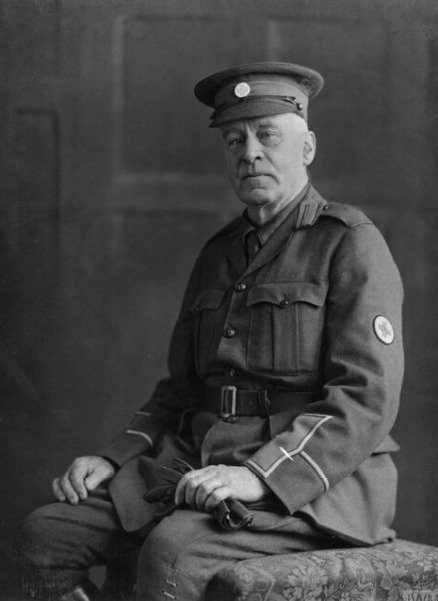 Imperial War Museums. Collections item. https://www.iwm.org.uk/collections/item/object/205290370. (pending identification A L Begbie)
Williams, David R. The Man for a New Country: Sir Matthew Baillie Begbie. Sidney, B.C.: Gray’s Publishing, 1977.
If this free archive of Neville Goddard’s lectures has helped you on your journey, consider helping keep it alive for others.
Support Cool Wisdom Books: Donate via Ko-fi.
Frequently Asked Questions
Who was Arthur Lipscombe Begbie?
Arthur Lipscombe Begbie (1852 to 1935) was a retired mining engineer living in Hammersmith, London. He is now officially identified as the "old Scotsman" Neville Goddard described meeting in 1925. This is the man who introduced him to mysticism, gave him a stack of esoteric books, and set him on the path that led to his later teachings.
How was Arthur identified?
By combing through British Library shipping manifests, census records, and trade directories, researchers found a 16-year-old apprentice tea broker named Matthew Stirling Begbie. Tracing his family backward led straight to his father, Arthur Lipscombe Begbie, which perfectly matched the details Neville gave about his mentor's son "Matt."
What other candidates were considered before Arthur?
Research had previously looked at spiritualist author Arthur Findlay and writer Harold Begbie, but neither fit. Most notably, neither of them had a son named Matthew, which was a vital detail from Neville's account.
Why was Arthur so hard to find before now?
His fourth cousin, Edward Harold Begbie, was a famous author known for reporting on the "Angels of Mons." Searches for the name "Begbie" in spiritualist archives kept surfacing Harold instead. Arthur wrote under the modest byline "A. L. Begbie," so his own essays and letters were completely overshadowed by his more famous relative.
What did Neville say about meeting his mentor?
In No Barrier But Self, Neville described an old Scotsman who told him his attitude of mind determined his life and gave him twenty or thirty books. In the lecture "The Maker and the Maker of Things," he recalled the man reading him the Bhagavad-Gita and The Light of Asia in 1925. Neville said this profound experience "inflamed" him.
Who was "Matt," Neville's friend?
Matthew Stirling Begbie (1905 to 1931) was Arthur's son and Neville's friend. He was about six months younger than Neville. In the lecture "Believe Him In," Neville recalled urging Matt to take an interest in his father's philosophy. Matt, however, wanted to "make a million" first. He later left for India to work in the tea trade and died there.
Was Arthur actually Scottish?
Not by birth. He was born in Notting Hill, Middlesex, in 1852, and the family was living at 160 Ladbroke Road, Kensington, by 1861. The Begbie family's lineage traces back to Haddingtonshire, Scotland, and Arthur himself spent time in Scotland. By 1871, at age 18, he was boarding at Boghall Farm in Lasswade, Midlothian. This detail may partly explain Neville's memory of him as a "Scotsman."
What was Arthur's education and family background?
Arthur was educated at Harrow School (The Grove) and left in 1867. His father, Thomas Stirling Begbie, was a merchant and shipowner whose finances were highly unstable, which included a 160,000 pound bankruptcy in the 1870s. Arthur's uncle was Sir Matthew Baillie Begbie, the first Chief Justice of British Columbia. He was nicknamed "The Hanging Judge" for his strict reputation on the Canadian frontier.
Did Arthur inherit a fortune?
Not much of one. Sir Matthew Baillie Begbie's estate was valued at over 133,000 dollars at his 1894 death, and Arthur's father appears to have received some of that inheritance. When Thomas Stirling Begbie died in 1899, however, his own estate was sworn at just 605 pounds and was administered by Arthur's sister. Arthur himself died in 1935 with a modest estate of 258 pounds, which he left to his second wife, May.
What did Arthur do before returning to London?
He emigrated to the United States in 1878. He worked as a mining engineer and superintendent in mining camps around Ouray, Colorado, and in other parts of the American West.
What happened with Arthur's first marriage?
Arthur married Alice Eliza Upton in Denver in 1885. After she required surgery and returned to England, Arthur refused to let her rejoin him. He mounted a long campaign to get her to agree to a divorce, writing letters that invoked the intense hardships of frontier life. He pursued divorce proceedings multiple times before finally succeeding in San Francisco in 1897 on grounds of desertion. Following a bitter appellate court battle that ended only when she passed away, Alice died in London in November 1899, leaving an estate of roughly 1,719 pounds to her brothers.
Who was Arthur's second wife?
He married Mary "May" Jobling, known professionally as May Cross, in March 1900. This was less than four months after Alice's death. May's father, Mark Ernest Jobling, was himself a mining engineer and a Fellow of the Geological Society. May was a classically trained opera singer who had performed in West End productions. She even played Trilby opposite a stage Svengali. This is a striking parallel when you consider Arthur's later interest in "magnetic healing" and mesmerism.
What became of Arthur and May's children?
Their first son, Tom, died the day he was born in March 1903. Their second son, Matthew Stirling Begbie, was born in January 1905 in Barnes. This is the very same "Matt" mentioned in Neville's lectures.
What was Arthur's connection to Spiritualism?
By the 1920s, Arthur was an active writer and practitioner of Spiritualism and vitalism. In 1922, he published an essay in Light magazine titled "Ancient Magnetic Healing." In it, he argued that the physical body runs on a "vital force" or "magnetic fluid" that ancient Egyptian priests and other traditional healers understood far better than modern medicine. He described drawing on spirit guides during his own healing work, identifying these guides as old Egyptian priests and American Indian healers.
Did Arthur and May engage in public debates about the occult?
Yes, they absolutely did. In 1913, May wrote to The Referee newspaper to defend a Spiritualist claim about population growth, which prompted a public rebuttal from another writer. Later, in 1929, Arthur wrote to Light magazine questioning how far early Church figures like Origen and Jerome had actually gotten the Bible's account of creation right. He noted that he had only ever received "contradictory replies" from the spirit world on the matter.
Where did Neville actually meet Arthur and May?
They met at the Begbie home at 36 Rowan Road in Hammersmith, West London, after Neville became friends with their son Matthew. It was in this very house that Arthur introduced Neville to seances and lent him books on Hermeticism and Eastern philosophy. This pivotal connection was also noted by Israel Regardie in his book The Romance of Metaphysics.
Did Neville always remember Arthur's details correctly?
Not entirely. In his 1963 lecture "Believe Him In," Neville accurately described Arthur as a retired mining engineer. However, in the 1966 lecture "The Word," he mistakenly recalled him as a retired opera singer. He was clearly blending Arthur's profession with his wife May's operatic career. Neville also misjudged Arthur's age, as Arthur was 73 in 1925, not 58.
What happened to Matthew?
After working as an apprentice tea broker in London, Matthew sailed for Ceylon in April 1929 to work as a tea planter. As we recently verified in the historic planter records, he actually worked as an Assistant Manager at the Pachaimalai Estate before dying of a tropical illness in July 1931 at the neighboring Selaliparai tea estate in the Anamallai Hills of South India at the young age of 26. Neville's lectures recalled Matthew dying of malaria only months after leaving London, but the primary records show he actually lived and worked in India for over two years before his passing.
How did Arthur and May's lives end?
After Matthew's death, records place Arthur briefly at Deerswood Farm in Crawley, Sussex. Eventually, he and May retired to Barnes, which is the district where Matthew had been born. Arthur died on August 14, 1935, at the age of 83. May lived on until 1954.
Why does this discovery matter?
It connects Neville Goddard's own account of his spiritual awakening in 1925 London to a real, documentable household featuring a retired frontier mining engineer, a West End opera singer, and their son. This finally fills in a massive, long-standing gap in Neville Goddard biographical research.