
Neville Goddard – Wikipedia and Photo Gallery
Wikipedia and Lecture SeriesNeville Goddard
 Neville Lancelot Goddard (1905–1972) | |
| Born | Neville Lancelot Goddard February 19, 1905 Fontabelle, St. Michael, Barbados |
|---|---|
| Died | October 1, 1972 (aged 67) West Hollywood, Los Angeles, California |
| Citizenship | British subject by birth; U.S. naturalized Sept 1, 1943 |
| Occupations | Lecturer, author, mystic; professional dancer (c. 1923–1930) |
| Spouses | Mildred Mary Hughes (m. 1923; div. 1938) Catherine Willa Van Schmus (m. 1942; d. 1975) |
| Children | Joseph Neville Goddard (1924–1986) Victoria Goddard (1942–2024) |
| Parents | Joseph Nathaniel Goddard; Wilhelmina Ellis Hinkson |
| Teachers | Arthur Lipscombe Begbie (1925, London) Abdullah: Dr. Modeste Abda’llah Guillaume (New York, from c. 1929) |
| Notable works | Ask of Me and At Your Command (1939); Your Faith Is Your Fortune (1941); Feeling Is the Secret (1944); The Power of Awareness (1952); The Law and the Promise (1961); Resurrection (1966) |
| Key dates | Feb 2, 1938: first independent lecture 1955: KTTV series Jul 20, 1959: awakening |
Overview
Neville Lancelot Goddard (February 19, 1905 – October 1, 1972) was a Barbados-born mystic, lecturer and author who became American by naturalization in 1943. He taught that the human imagination is God and the sole creative power, and that a person changes circumstances by assuming the feeling of the wish fulfilled. His public teaching, from the 1930s to 1972, took place in New York, Los Angeles and San Francisco.
His system has two parts. The Law is the practical method: imaginal acts, “living in the end,” the state akin to sleep, revision. The Promise is the scriptural drama he said unfolds inside the individual, culminating in a rebirth “from above” out of the skull. He dated the beginning of this phase to his awakening at the Sir Francis Drake Hotel, San Francisco, on July 20, 1959.
He credited two teachers. The first was an “old Scotsman” he met in London in 1925, identified in 2026 from British Library, census, shipping and probate records as Arthur Lipscombe Begbie (1852–1935), a retired mining engineer and spiritualist. The second was Abdullah, a Black mystic he studied with in New York, identified from copyright, census, newspaper and Library of Congress records as Dr. Modeste Abda’llah Guillaume (born c. 1871 in Algiers), who published as G. Mahmud Ahmad Abdoullah.
How to use this archive index. Each section synthesizes primary archival records, historical newspapers, civil registries, and lecture transcripts, followed by direct links to the full Cool Wisdom Books research articles. Where historical records conflict with oral accounts or secondary biographies, the evidence is compared under Archival Notes & Historical Discrepancies.
- Which Abdullah? Sorting Evidence from Myth in Neville Goddard Research
- Who Was Abdullah, Neville Goddard’s Teacher? The Infographic
- Neville Goddard's Abdullah: The 1909 Turban Photo Portraits and Historical Timeline Recap
- Who Was the “Old Scotsman” Neville Goddard Met in 1925? Let's Examine Arthur Findlay and Harold Begbie
- Overview
- Names, spellings and identity of the principal figures
- Family and ancestry
- Early life: Barbados, New York and the dance career (1905–1929)
- London, 1925: the “old Scotsman” Arthur Lipscombe Begbie
- Rosicrucian and Greenwich Village years (c. 1929–1933)
- Abdullah: the teacher
- The 1935 songs of G. M. Ahmad-Abdoullah
- Public career as lecturer (1938–1972)
- Publishing history
- Marriages, children and Victoria Goddard
- Military service and naturalization (1942–1943)
- Residences
- The Law: teachings and techniques
- The Promise and the 1959 awakening
- Final years and death (1969–1972)
- Intellectual and esoteric lineage
- Students, associates and contemporaries
- Finances
- Myths, corrections and historiography
- Bibliography, discography and audio
- Archival notes and historical discrepancies
- Master source index
Names, spellings and identity of the principal figures
- Neville was billed simply as “Neville” in dance notices and lecture ads; the 1939 pamphlet and book were credited to “Neville.”
- Abdullah / “Ab”: Dr. Modeste Abda’llah Guillaume; also “Modeste Bel Guillaume,” “M. A. Guillaume,” “G. M. Abdallah,” “G. Modeste Abdoullah,” “G. Mahmud Ahmad Abdoullah,” “G. M. Ahmad-Abdoullah,” and in a 1928 New York Times ad “G. M. Akhmad Abdoullah.” The 1923 copyright cards list the author as a citizen of Algiers.
- Amerique: stage name of Jeannette Johnson, Neville’s dance partner.
- The “old Scotsman”: Arthur Lipscombe Begbie (A. L. Begbie). Not his fourth cousin Edward Harold Begbie (journalist, 1871–1929), and not Arthur Findlay, both earlier candidates.
- Matthew Stirling Begbie: Arthur’s son and Neville’s London friend (1905–1931); appears in the 1929 electoral register as “Mathey Stirling.”
- Mildred / Mildrid Mary (“Mary”) Hughes: first wife; spelled variously in records.
- Catherine Willa Van Schmus: second wife; Neville’s lectures call her “Willa” and "Bill".
- William Henri (“W. Henri”) Zay: baritone and Anthroposophist who bought 30 West 72nd Street in 1923.
- Who Was Abdullah, Neville Goddard’s Teacher? The Infographic
- Which Abdullah? Sorting Evidence from Myth in Neville Goddard Research
- Who Was the “Old Scotsman” Neville Goddard Met in 1925? Let's Examine Arthur Findlay and Harold Begbie
- The British Library Records That Solved the Mystery of Neville’s Mentor: The “Old Scotsman” is Arthur Lipscombe Begbie
- Neville Goddard: Marriages, Children and Family Tree: Research Notes
- The Abdullah Investigation: The Hidden Teacher of Neville Goddard - Part 4: Abdullah Identified – The Baritone Mystic of Atlantic City and 30 West 72nd Street
- “Abdullah's Real Name” Neville Goddard Research (New York) Part #2
Family and ancestry
Goddard lineage
The family traces to Staple Fitzpaine, Somerset; Captain Nicholas Goddard, a mariner and bondsman, was in Barbados c. 1637 and the family has remained there since. Neville’s paternal grandparents were Joseph Josiah Goddard and Mary Elizabeth Jane King. In the 19th and early 20th centuries the family were “Redlegs,” poor white laborers in St. John parish. His father, Joseph Nathaniel (“Old Joe”) Goddard, was born November 24, 1874 in Clifton Hall Woods, St. John, and moved to Bridgetown in 1890. He married Wilhelmina (“Willa”) Ellis Hinkson, daughter of John William Ellis Hinkson and Elizabeth Ann Gibson. In lectures Neville traced his “physical blood” to Scotland, England and Ireland, with “a little bit of Holland Dutch” from his mother’s side. She died in 1941 and Old Joe never remarried.
Neville’s own 1905 birthplace was the family home Sunnyside, Fontabelle, St. Michael. In 1926 Old Joe bought the Kensington Plantation yard (15 acres) in Fontabelle; Kensington House was the family home for the next 65 years.
Siblings
Ten children (nine sons, one daughter), from the family-tree post:
- Worrel Cecil, b. Feb 21, 1901
- Edward Victor, b. Jun 2, 1902 (business partner of “Old Joe”)
- Arthur Lawrence, b. Nov 6, 1903, d. Aug 4, 1966, Batavia, Illinois
- Neville Lancelot, b. Feb 19, 1905
- Herbert Colin, b. Mar 4, 1906, d. Aug 20, 1984
- Fred Carlton, b. Jul 16, 1907, d. Apr 23, 1990, Barbados
- Bruce Elliss, b. Aug 28, 1908
- Hilda Daphne, b. Sep 14, 1909, d. Mar 29, 1975
- Joseph Russel, b. May 4, 1918
- John Douglas Claude, b. Apr 2, 1919, d. Aug 26, 1987, England (captain of the first West Indies team to win a Test series in England)
A 1978 Bajan account says six of Old Joe’s other eight sons entered the business, along with the husband of his only daughter; of those who did not, one became a doctor, Dr. Lawrence Goddard (probably Arthur Lawrence), while Neville became a professional dancer. Neville’s 1922 arrival record names a brother “L. Goddard” at 138a Dean St., Brooklyn. In the 1959 awakening vision he saw brothers Cecil, Victor and “my brother who is a doctor.”
J. N. Goddard & Sons and Goddard Enterprises
- 1890: Old Joe moves to Bridgetown as a store clerk; by 1898 he runs a bar and meat stall; 1900, an ice-house partnership on Broad Street. A clerk recalled him estimating the weight of oxen swimming ashore from Carlisle Bay to within 100 lb.
- 1920–21: going into business alone at 46; on Oct 13, 1921 he formed a partnership with son Victor (Harrison College; Ontario Business College, Belleville) to open a meat and grocery store.
- Oct 13, 1924: purchase of the Ice House Building on Broad Street, the first refrigerated meat store in Bridgetown, the purchase Neville cited as living in the end.
- 1930s–40s: bakeries (Johnson & Redman, 1936), department stores and hotels (1943), C. F. Harrison (1944), airline catering. 1960s: supermarkets (Rendezvous, 1964).
- Goddard’s Gold Braid Rum; Neville brought his father’s rum and brandy to Abdullah.
- Goddard Enterprises Limited today: 50+ companies in 23 countries. A 1988 interview series with Richard Goddard at “Bleak House” is quoted in the family-business post.
At Old Joe’s death the enterprise was valued at roughly $20 million, and each of the ten children received an equal share. His death date is itself disputed (see Discrepancies). See also Finances.
Descendants
Son Joseph Neville Goddard (May 19, 1924 – Mar 1, 1986) married Loris H. Peterson (1942; div. Jul 30, 1946), Virginia B. Siena (1949; div. Mar 26, 1959) and Iris Angela Johnson (b. Mar 30, 1936; m. May 6, 1963 at Four Winds, Maxwell, Barbados). Daughter Victoria “Vicki” Goddard (Jun 28, 1942 – Sep 25, 2024) is covered under Marriages.
- Neville Goddard: Marriages, Children and Family Tree: Research Notes
- How Neville Goddard’s Family Built Their Fortune: Rags to Riches, Rum, and Reinvention — Redlegs, rum, Goddard Enterprises; 1978 Bajan account of Old Joe
- The Finances of Neville Goddard: What He Charged for Lectures and Why He Never Charged for Private Interviews — inheritance and income data
- In Memory of Victoria Goddard, Daughter of Neville Goddard (1942–2024)
- Where Neville Goddard Lived in New York and West Hollywood — Staple Fitzpaine origin; Kensington House; arrival record
- Neville Goddard Lectures: "Abdullah How We Got Together Q&A"
Early life: Barbados, New York and the dance career (1905–1929)
Neville was born February 19, 1905 at Sunnyside, Fontabelle, St. Michael. He left school with limited formal education (the 1942 Army record lists three years of high school). The manifest shows he arrived in the Port of New York on September 25, 1922, aged 17 (5′9″, single), aboard the Vasari; a lecture quoted in one post says 1921, and the post notes the manifest date. He stayed a week with his brother at 138a Dean Street, Brooklyn. He took a job as an elevator operator at J. C. Penney ($15 a week), was let go, then worked on Macy’s shipping dock ($13 a week by one account; Neville elsewhere says $18). In anger he resolved never to work for another.
On October 13, 1923 he married Mildred Mary Hughes (b. 1901, England). Their son Joseph was born May 19, 1924. The divorce for adultery came later (see Marriages).
Neville and Amerique
His professional partner was Jeannette Johnson, a California society girl who left Stanford for the stage as “Amerique.” In 1925 they sailed for England and were billed at Ciro’s in London (the post places it at the Orange Street jazz club), the Winter Garden in Berlin and the Ambassador in Paris. In the lecture God’s Almighty Power Neville says they were paid “one hundred pounds a week,” about $480; they declined offers in marks or francs. In the U.S. they played vaudeville and Broadway-house circuits in 1926–27; a notice from summer 1927 says they “stopped the show.” He re-entered the U.S. on Dec 23, 1925 aboard the S.S. America.
One of his last performances with Amerique was in July 1932 at the RKO Prospect, and the next dance notice found is a single 1935 gig at the Cascades in Boston with Hughie Barrett. In the 1930 census he is a lodger at 146 West 49th Street, a theatrical boarding hotel. CWB has debunked the claim that he danced in The Gay Divorcee (shot in California June 28 – Aug 13, 1934); the posts note the Goddards did not move west until 1955.
Search for God (late 1920s)
In a lecture he describes “searching for an experience of God” at 24, trying strict vegetarianism and not touching drink or drugs. He later called the asceticism misguided. CWB ties his seven-year vegetarianism and celibacy to the Rosicrucian period.
- Neville Goddard Like You've Never Seen Him - In ‘Somewhat Striking’ Costumes at Ciro's London
- Before the Mysticism: Neville Goddard & Amerique "Stopped the Show" in the Summer of 1927 — 1927 clipping "stopped the show"
- Neville Goddard Research: Neville & Amerique - Broadway Shows and Theaters
- Debunking the Myth: Neville Goddard Was Not a Dancer in The Gay Divorcee — myth debunked; dance career ended 1932
- A Birthmark in the Records: New Traces of Neville Goddard — 1930 address; 1943 petition records a birthmark on right upper lip
- The Finances of Neville Goddard: What He Charged for Lectures and Why He Never Charged for Private Interviews
- Neville Goddard on Drugs, Dope, Marijuana, LSD, Alcohol, Cigarettes, Vegetarianism etc
- Neville Goddard: Marriages, Children and Family Tree: Research Notes
- Where Neville Goddard Lived in New York and West Hollywood — arrival manifest, Penney and Macy’s jobs
- Neville Goddard Lectures: "Abdullah How We Got Together Q&A"
London, 1925: the “old Scotsman” Arthur Lipscombe Begbie
In No Barrier But Self Neville recalls that in 1925 in London “an old Scotsman” told him his attitude of mind determined his life, and gave him twenty or thirty books. In The Maker and the Maker of Things he says the man read him the Bhagavad-Gita and The Light of Asia. For decades the figure was identified only through Israel Regardie’s The Romance of Metaphysics, which names an “Arthur Begbie” who introduced him to psychical research and the séance. CWB first examined two wrong candidates, journalist Harold Begbie and spiritualist author Arthur Findlay.
In September 2026 a London researcher working through the British Library, shipping manifests, census records and trade directories found a 16-year-old apprentice tea broker, Matthew Stirling Begbie, whose paper trail led to his father, Arthur Lipscombe Begbie. Neville had introduced “Matt” in the lecture Believe Him In.
Arthur Lipscombe Begbie (1852–1935)
- Birth and family. Born June 11, 1852 in Notting Hill, Middlesex, son of Thomas Stirling Begbie (merchant and shipowner; insolvent in 1865, some records say £160,000; d. 1899) and Gertrude. Educated at Harrow (The Grove, left 1867); in 1871 a boarder at Boghall Farm, Lasswade, Midlothian. His uncle was Sir Matthew Baillie Begbie, first Chief Justice of British Columbia (“the Hanging Judge,” d. 1894). Fourth cousin of the writer Harold Begbie; both descend from Alexander Begbie of Haddingtonshire.
- The American West. Sailed for the U.S. in October 1878 (S.S. Australia); mining engineer and superintendent at Ouray, Colorado. Married Alice Eliza Upton (a Shropshire clergyman’s daughter) in Denver on Oct 15, 1885; naturalized in Colorado in 1888. He sought a divorce in Colorado four times, then in San Francisco in 1896, where the fifth petition was granted on grounds of desertion after his letters were read in open court. Newspapers covered it as “A Mixture of Love and Hate.” Alice died in Bayswater on Nov 26, 1899. Arthur’s Utah years appear in his later letter on electrical healing.
- Second marriage. On Mar 19, 1900 (St. Philip, Kensington) he married Mary “May” Jobling (b. May 22, 1874), daughter of actress Emily Cross and mining engineer Mark Ernest Jobling. Milan-trained and billed as “May Cross,” she sang at the Lyric Theatre in 1894 (His Excellency) and toured as Trilby opposite a Svengali. A first son, Tom, died the day he was born in March 1903. Matthew Stirling Begbie was born Jan 11, 1905 at 34 Elm Bank Gardens, Barnes. The family were at 36 Rowan Road, Hammersmith, by 1910 and later at 8 Byfield Gardens, Barnes.
- Spiritualist writings. August 1913: May’s letter on reincarnation and population in The Referee draws a rebuttal from William Bull (Aug 17, 1913). In Light: Feb 19, 1921 (first sign); May 14, 1921 (electrical healing); Feb 25, 1922, “Ancient Magnetic Healing,” attributing his methods to spirit guides he called Old Egyptian priests and American Indian healers; June 8, 1929, “Truths—Ancient and Modern,” questioning how far Origen and Jerome taught truth when compiling the Bible; Dec 14, 1929, “The Higher Conception of Deity,” written from Deerswood Farm, Crawley, Sussex, the address later on Matthew’s burial record.
- Death. Arthur died in Barnes on August 14, 1935, estate £258 to May. May died in Barnes on January 1, 1954.
Matthew Stirling Begbie (1905–1931)
An apprentice and clerk with tea brokers Harrison & Co., Rood Lane. He attended a Richmond Royal Hospital charity ball in Dec 1926. On Apr 6, 1929 he sailed on the S.S. Margha for Colombo as a “Tea Planter,” and died on July 28, 1931, aged 26, at the Selaliparai estate in the Anamallai Hills; he was buried at Valparai (BACSA record 531490). Neville’s memory was compressed: he said Matt left for India shortly after 1925 and died three months later, said Matt was “six months my junior” (he was five weeks older), and said the father was fifty-eight (Arthur was 73). In The Word (1966) he blended Arthur’s profession with May’s opera career.
Regardie writes that after returning to America in 1926 Neville’s interest in mysticism grew as his theater interest waned.
- Who Was the “Old Scotsman” Neville Goddard Met in 1925? Let's Examine Arthur Findlay and Harold Begbie — start here; wrong candidates Findlay and Harold Begbie
- The British Library Records That Solved the Mystery of Neville’s Mentor: The “Old Scotsman” is Arthur Lipscombe Begbie — full Begbie biography with BACSA, FamilySearch and probate references
- Neville Goddard's Mentor: Arthur Begbie's Letters in Psychical and Occult Journal "Light" — Begbie’s Light letters, 1921–1929
Rosicrucian and Greenwich Village years (c. 1929–1933)
A 1931 issue of The Rosicrucian Fellowship Magazine (Max Heindel’s Christian-esoteric group, not AMORC) reports that “Mr. Neville Goddard, a visiting lecturer from New York” gave two lectures at its Cleveland center, praising his “rich voice.” That places him on a lecture platform seven years before the traditional date of Feb 2, 1938. The Fellowship’s New York headquarters at 210 W. 72nd Street sat a few doors from 30 W. 72nd and a short walk from Neville’s apartment at 154 W. 75th. Margaret Ruth Broome’s account says he studied many subjects, joined the Rosicrucians, and even taught astrology before giving it up.
The four New York Rosicrucian bodies, 1921–1933
- AMORC, founded in New York in 1915 by H. Spencer Lewis (1883–1939), mail-order lessons and lodges, magazine The Mystic Triangle.
- Fraternitas Rosae Crucis (FRC), in a bitter legitimacy dispute with AMORC.
- Societas Rosicruciana in America (SRIA).
- The Rosicrucian Fellowship (Heindel), the one tied to Neville.
In a lecture he recalls living on West 4th Street in Greenwich Village in the Depression, “sitting in the Silence.” The friend who took him to Abdullah was a Catholic priest named David who had flunked out of Fordham, lost a $2 million inheritance (from a rumrunner father) on Wall Street, and whom Neville distrusted. CWB compares this “Wall Street priest” with the benefactor in John McDonald’s The Message of a Master (1929; HathiTrust attributes it to John McDonald, b. 1889, while many sources say another J. McDonald, b. 1906); the identification is unsettled, and those posts pre-date the Abdullah series.
- New Evidence: Neville Goddard Was Teaching in Rosicrucian Circles Before Abdullah — 1931 Cleveland lectures
- Rosicrucian Societies in NYC (1921–1933) — overview of the four societies
- Timeline of Neville Goddard’s Lecture Venues and Appearances (1931–1971)
- About Abdullah: "The Wall Street Priest David B" Neville Goddard Research (New York) Part #3 — David B., the Wall Street priest (pre-dates the Abdullah identification)
- The Curious Case of the Book "The Message of a Master": John McDonald, Anna Deo, and the Grapevine of New Thought — Message of a Master, John McDonald and Anna Deo
- John McDonald: "The Message of a Master" (1929) — full book, HathiTrust note
- Alys Bentley, Studio 61 Carnegie Hall - Ouspensky, Gurdjieff and Orage - Neville Goddard Research — Alys Bentley, Studio 61 Carnegie Hall
- Neville Goddard: Marriages, Children and Family Tree: Research Notes
Abdullah: the teacher

First meeting and teaching
The priest David pressed Neville for months. On arrival Abdullah called him by name and said, “Neville, you are late, you’re six months late.” The residence table dates the meeting to 1929; Neville said he studied with him seven years, and Freedom Barry recalled Neville saying “seven days a week for seven years.” Abdullah held classes on the first floor of 30 West 72nd Street. Neville said Abdullah never took a dollar from him, took him to Wagner’s Parsifal at the Met on Good Friday and bought seats “not beyond the sixth row,” ate enormous meals with rye and ale while Neville was a vegetarian, and kept letters on Cabala in the old Bible Neville later carried. The teaching included Hebrew as a psychological code, Kabbalah, a non-historical reading of the Bible, and living in the end. Neville’s verdict: Abdullah “knew the Law but not the Promise.” Abdullah called his circle “the Brothers.”
The Barbados lesson (c. late 1933)
In October, almost twelve years after leaving Barbados and with no money, Neville told Abdullah he had a “haunting desire” to go home. Abdullah said, “You are in Barbados.” Neville was to see Bridgetown from Manhattan and sleep as though in his father’s house. He later brought rum and brandy for Abdullah, who finished them within a week.
Who Abdullah was: the archival case
- Birth and early career (to 1903). Born c. 1871 in Algiers (the 1920 census gives age 49, born Algiers); immigrated 1895, naturalized 1902. London clippings (1891–98) place “M. A. Guillaume” at the Princess’s Theatre as a “Parisian Mime”; his ads cite the Paris Conservatoire and the Lamperti method. A December 1903 copyright record lists him as a composer in Washington, D.C.
- Williams & Walker (1904–1909). Baritone in the fifteen-member Williams & Walker Glee Club (summer 1905), which sang in Booker T. Washington’s South Weymouth home. On Jan 21, 1909 the Pekin Theatre, Chicago, credited “Chief Bungaboo” as “Arranged by M. Bel Guillaume.” 1909 turban portraits were taken at the Baker Art Gallery, Ohio.
- Atlantic City (1905–1923). Bel Canto Conservatory at 1708 Arctic Avenue; wife Cora Contee Guillaume (1920 census, music professor, with a Moroccan lodger). Feb 4, 1920: the Church of the Religion of Love and of Spiritualistic Phenomena was incorporated there, with Prof. M. Abda’llah Guillaume as high priest, with Bessie B. Payne and Elizabeth M. Maconochie as trustees; also the School of the Great Mindlight. Ads from 1920–23 offered the “science of Being” and the “mystery books of Moses,” which CWB now reads as the Sixth and Seventh Books of Moses grimoire stream: folk Kabbalah plus New Thought “law,” not Lurianic Kabbalah. In Oct–Nov 1923 he copyrighted The Book of Peace or Bible of the Master Student, Science of Applied Mind Control and Wealth of Abdoullahistic Metaphysiology and The New Covenant of Peace (claimant “G. Modeste Abdoullah,” author “G. Mahmud Ahmad Abdoullah, citizen of Algiers”). The Press of Atlantic City notices stop on Oct 8, 1923.
- Houdini connection (before Oct 1926). Houdini’s investigator Rose Mackenberg obtained an ordination certificate for “Rev. Allicia Bunck” (“all is bunk”) from the same church, signed “G.M.A. Abdoullah.”
- Family left behind. In 1930 Cora is at 1709 Disston Avenue, Atlantic City, “married” and living with her mother Ella Contee; by 1940 she calls herself widowed and is active in the A.M.E. Zion Church. An August 1966 default tax-sale notice for 1709 Disston names the debtor as “G. M. Abdaillah, a.k.a. Guillaume M. Abda’llah.”
- New York (1927–1935). A 1927 Waldorf-Astoria address to the Woman’s Press Club; Nov 1928 New York Times ads for “Soul Unfoldment” Sundays and Thursdays at 30 West 72nd, with secretary Zaida Roberts teaching “Twelve Steps of Conscious Mystic Progress”; on Dec 17, 1928 an interfaith stage at St. Bartholomew Community House, Park Avenue, shared with Yogananda’s circle. On Oct 4, 1935 The Madison Eagle calls him “the Arabian Philosopher, composer and poet,” traveling with “Miss Zaida Roberts of New York.” In the March 10, 1964 Q&A of Who Are the Condemned Neville says about seven years earlier (c. 1957) he met Abdullah’s secretary.
- 1935 songs. Nine registered, eight recovered (see below).
30 West 72nd Street
The house was built by Henry Morgenthau Sr. On Sept 13, 1923 the New York Times reported the Morgenthaus sold it to baritone and Anthroposophist William Henri Zay (a Lamperti-line teacher, author of Practical Psychology of the Voice), who moved his studio there. Between 1925 and 1931 it housed the Anthroposophical Society of New York, then after Zay’s death in 1927 and under his widow Eileen it became the Emmy Heiss Memorial Center, with Hall No. 1 let to spiritualist churches and weekday classes in psychic development, numerology and healing; the medium Arthur Ford was among those listed. Neville remembered the house as Morgenthau-owned and rented by Henry Morgenthau Jr.; CWB marks that detail as a misremembering while confirming the address.
The “Ethiopian” puzzle, the composite theory and dead ends
In the 1964 lecture The Hatching Neville said Abdullah was a “Negro Jew, born in Ethiopia”; in the Q&A of the lecture on how they got together he said he was “born in North Africa, of Jewish parents, raised in a strict Orthodox Jewish home.” CWB argues “Ethiopia” was period shorthand for “of Africa.” Part 3 of the series, which explored Beta Israel and Egyptian routes, is now superseded by the Algiers record. Other accounts: Winifred Flood says “from Africa”; Joseph Murphy’s biographer Bernard Cantin (1987) calls him “a black Jew from Israel,” an anachronism CWB flags as probably Cantin’s own shorthand and not a dated meeting. Historian Mitch Horowitz had floated a composite or the Harlem rabbi Arnold Josiah Ford, who left for Ethiopia c. 1930–31 and died there in 1935. “Abdullah Was One Man” answers that with the continuous paper trail. A separate dead end, the German-Jewish astrologer “Prof. Abdullah” Barin L. Behrendt (active in 1890s New York, hospitalized in 1933), is documented in Part 2 of the earlier series only so others will not repeat the search.
Library and curriculum
CWB reconstructs the books implied by Abdullah’s ad language and compares his “Hidden Curriculum” (Proof and Prosperity, 1920–23) with Neville’s later vocabulary. Another post pairs Neville, Aleister Crowley and Abdullah’s “grimoires.” Part 1 of the main series surveys Harlem’s esoteric currents and Part 2 Freemasonic and “Ethiopian” lodge circles (Murphy’s Masonic ties, Ford’s 33° Scottish Rite membership).
- Who Was Abdullah, Neville Goddard’s Teacher? The Infographic — infographic; start here
- Which Abdullah? Sorting Evidence from Myth in Neville Goddard Research — series master index and myth-vs-evidence
- Abdullah Was One Man: G. Mahmud Ahmad Abdoullah (Modeste Guillaume), Neville Goddard’s Mentor — composite theory answered
- Neville Goddard's Abdullah: The 1909 Turban Photo Portraits and Historical Timeline Recap — 1909 turban photos + timeline recap
- Historical Photographs of Dr. Modeste Abda’llah Guillaume (Abdullah): Neville Goddard’s Teacher
- Neville Goddard's Teacher Abdullah: Original Copyright Cards for Abdullah's Books — original copyright cards
- Neville Goddard’s Abdullah: When ‘Modeste Guillaume’ Became G. Mahmud-Ahmad: The 1923 Pivot (G. M. Ahmad-Abdoullah)
- Neville Goddard's Teacher: Abdullah's Hidden Curriculum - Proof and Prosperity (Ads Unearthed 1920–23)
- Neville Goddard Research: Abdullah published “Science of Applied Mind Control and Wealth of Abdoullahistic Metaphysiology” (1923) - G. Mahmud-Ahmad
- The Final Link to 30 West 72nd: This Is Neville Goddard’s Real Teacher, Abdullah
- Before Neville Goddard: Modeste Abdallah Guillaume between the Williams & Walker Glee Club and the Bel Canto Studio (1905–1910)
- The Neville Goddard & Abdullah Library: Books From the Language of Abdullah’s Advertisements (1919–1928)
- Part 4.5 - Houdini to Yogananda: Following Neville Goddard's Abdullah from Atlantic City to NYC
- 30 W 72nd Street: Henri Zay, The Anthroposophical Society, Neville Goddard and the Search for Abdullah
- "About Abdullah" Neville Goddard Research (New York) Part #1
- “Abdullah's Real Name” Neville Goddard Research (New York) Part #2 — Part 2 (earlier series): the Behrendt dead end
- About Abdullah: "The Wall Street Priest David B" Neville Goddard Research (New York) Part #3
- The Abdullah Investigation: The Hidden Teacher of Neville Goddard – Part 1: Harlem’s Secret Fire — Esoteric Currents of the 1920s–30s — Part 1: Harlem esoteric context
- The Abdullah Investigation: The Hidden Teacher of Neville Goddard – Part 2: Obelisks, Lodges & Ethiopian Mystics — Part 2: obelisks, lodges, Ethiopian mystics
- The Abdullah Investigation: The Hidden Teacher of Neville Goddard – Part 3: Mokomba, Mahalla & the Names That Vanish — Part 3: Beta Israel route (superseded by the Algiers record)
- The Abdullah Investigation: The Hidden Teacher of Neville Goddard - Part 4: Abdullah Identified – The Baritone Mystic of Atlantic City and 30 West 72nd Street — Part 4: Abdullah identified — 1920 census, Cora, Zay, 30 W 72nd
- Neville Goddard Lectures: "Abdullah How We Got Together Q&A" — Q&A: how they got together; 1933 story
- The Music of “The Law”: How Abdullah Encoded Neville Goddard’s Teaching in Nine Lost Songs of 1935 — songs as encoded teaching
- Changing Channels in the Underworld: Neville, Crowley & Abdullah’s Secret Grimoires
- The Sheet Music of G. M. Ahmad-Abdoullah (Neville Goddard's Teacher & Early Black Broadway Baritone): 8 Recovered 1935 Scores — sheet music from the Library of Congress
- The Musical Legacy of Abdoullah Listen to the 8 Rediscovered Masterpieces From 1935 — listen to the 8 recovered songs
- How Neville Goddard’s Family Built Their Fortune: Rags to Riches, Rum, and Reinvention
- Joseph Murphy Tells His Story to Bernard Cantin: English Translation (Neville Goddard & Abdullah) — Joseph Murphy / Cantin, with caveats
- "Revelations on The Book of Revelation" - Winifred Maccardell Flood (1952) - Neville Goddard and Abdullah Student — Winifred Flood preface (Abdullah “from Africa”)
- Extra Census Images - The Baritone Mystic of Atlantic City and 30 West 72nd Street — 1905–1940 census & marriage records for Cora Contee and Modeste Guillaume
The 1935 songs of G. M. Ahmad-Abdoullah
Nine original voice-and-piano compositions were registered with the U.S. Copyright Office in 1935 listing 30 West 72nd Street, New York City as the composer’s address. Eight of the nine deposit scores were recovered from the Library of Congress archives in 2026, newly typeset, recorded, and released on Bandcamp:
- That That Is Me (Jan 14, 1935, E pub. 46029) — a non-dual statement echoing Tat Tvam Asi and I AM THAT I AM.
- Manuka (Rest) (Jan 14, 1935, E pub. 46030) — handwritten subtitle “Rest,” prefiguring Neville’s teaching on the mental Sabbath.
- Friendless–Friend (A Song of Unrequited Love) (Jan 29, 1935, E pub. 46366).
- Peace and Rest (Jan 29, 1935, E pub. 46253).
- Somewhere (A Song of Trust in the Absolute) (Apr 25, 1935, E pub. 48353) — words by co-author Marjorie Cameron MacLean of 105 W. Tremont Ave., Bronx (wife of Scottish Rite Mason Daniel MacLean).
- Norma (May 6, 1935, E pub. 48030).
- Sehnsucht (Thinking and Dreaming Always of You) (May 6, 1935, E pub. 48031).
- A Madonna to Her Child (So Wonderful, So Beautiful, So Sweet) (May 13, 1935, E pub. 48217).
- Ave Maria (Glorified Presence Thou Art Our Prayer!) (May 13, 1935, E pub. 48218) — the ninth registered copyright card (score not yet recovered among the eight deposit copies).
The post on The Music of “The Law” demonstrates how these 1935 song titles and subtitles encode the exact metaphysical vocabulary Neville later taught from the platform.
- The Musical Legacy of Abdoullah Listen to the 8 Rediscovered Masterpieces From 1935
- The Sheet Music of G. M. Ahmad-Abdoullah (Neville Goddard's Teacher & Early Black Broadway Baritone): 8 Recovered 1935 Scores
- The Music of “The Law”: How Abdullah Encoded Neville Goddard’s Teaching in Nine Lost Songs of 1935
Public career as lecturer (1938–1972)
New York (1938–c. 1948)
The conventional date for Neville’s debut is Feb 2, 1938, at Steinway Hall (second location, built 1925), self-produced with a borrowed five dollars; the date matched the birthday of Catherine, his future wife. The residence table records the first lecture’s title as “Secret of the Sperm.” Regardie’s The Romance of Metaphysics (1945, p. 151) describes him, “not more than 36,” speaking on Wednesday, Friday and Sunday nights at the Old Actor’s Church near Broadway on 49th Street to “four to five hundred men and women.” In 1943 he lectured Sunday evenings at 8 p.m. at the Union Methodist Episcopal Church, 229 W. 48th St. (admission 25¢); The New Yorker profiled him on September 11, 1943 as “A Blue Flame on the Forehead.” The mid-1940s brought Town Hall.
West Coast
- 1945: at Ernest Holmes’s Institute of Religious Science, Los Angeles (3251 W. 6th St.), Neville was reprimanded for charging $40 for five talks (Holmes charged $25) and told not to teach the non-historicity of the Bible. He left and began a “gentleman’s agreement” with Dr. Frederick Bailes. CWB identifies “the Head” as Holmes and “Fred” as Bailes.
- 1948: Wilshire Ebell Theatre, Los Angeles; Absolute Science Church, San Francisco; International New Thought Alliance convention alongside Bailes.
- 1948–1964: annual San Francisco series at Scottish Rite Auditorium, Palace Hotel and the Sir Francis Drake Hotel.
- 1953–54: filled in for Bailes at the Fox Wilshire Theatre; a man spent his last $54 to hear Neville after hearing Bailes promote him on KECA radio.
- 1955: 26 half-hour KTTV telecasts; two LPs (see Discography).
- 1957: ten-lecture Wilshire-Ebell series, May 13–24; many recordings lost.
- 1960: Freedom Barry’s space in the Lord and Jordan bookstore (seating 30) hosts first San Francisco lectures Feb 1; later the Marines’ Memorial Club (seating 150).
- 1967–68: Marines’ Memorial Club series, January 1967 and July 1968.
- 1957–1971: Ebell Club, Women’s University Club, Ritz Theater, Grauman’s Chinese Theatre.
Television, radio, Pyne
KTTV aired Sundays at 1 p.m. (TV-Radio Life) or 2:00–2:30 (Neville’s memory): he sat at a desk and spoke extemporaneously with no director. The 5,000-letter response to an earlier single telecast and the “new and controversial personality” profile come from Jack Holland’s 1955 piece. Asked about Neville, Norman Vincent Peale is quoted as saying he is a fine man but “a one hundred percent metaphysician, whereas I am a minister.” No footage survives. The Joe Pyne appearances rest on A. Ramana’s memoir: he says the show (which he dates 1965–67) had Neville on “quite often” as the guest who could handle the Bible, and he describes three fundamentalists with open Bibles against Neville with none. No episode has yet been located; the Pyne post in the export is a Wayback biography of Pyne (a combative interviewer who moved from KLAC radio to KTTV and WNEW-TV in 1966).
Teaching style
A 1943 reporter notes the audience flung heads back, closed eyes and went into the silence for about two minutes after he said “Let us now go into the silence.” Margaret Ruth Broome attended for seven years and could not recall what he said afterward because he took her with him. Freedom Barry recalled that Neville never drove, owned a car or held a license, nor did his wife.
- Timeline of Neville Goddard’s Lecture Venues and Appearances (1931–1971) — venue-by-venue table, 1931–1971
- Neville Goddard Lectures: All the Marines’ Memorial Club - San Francisco Lectures (1968) — 1967–68 San Francisco lecture lists
- Neville Goddard in 1957: Lecture Titles, Newspaper Clippings – Can You Help Fill the Gaps? — 1957 lecture titles and clippings
- 136 Neville Goddard’s Original Audio Recordings: Originals, Snap, Crackles, Pops and All — 136 original recordings (Archive.org lists)
- Neville Goddard - 1943 New Yorker article "A Blue Flame on the Forehead" — The New Yorker, 1943
- Who is Neville? The Untold Story of KTTV’s New and Controversial Personality — KTTV profile (Jack Holland)
- Neville Goddard Lectures: “All Things Are Possible” Transcript of Televised Talk KTTV (1955) — surviving transcript from the 1955 KTTV Channel 11 television series
- Is There Video Footage of Neville Goddard? The Lost KTTV Broadcasts, Joe Pyne and the Hunt for Video Evidence
- Joe Pyne Show: Episodes with Neville Goddard? — Pyne background (no Neville episodes identified)
- Neville Goddard: A Portrait by Israel Regardie [Images] — Regardie, The Romance of Metaphysics (1945), p. 151
- Ernest Holmes and the $25 Paranoia: What Drove Neville Goddard and Frederick Bailes Out of Religious Science — Holmes, Bailes and the $25 dispute
- Neville Goddard & Frederick Bailes [Invisible Marriage Agent and Rich Get Richer] — Bailes friendship, KECA radio
- 1960 Neville Goddard LP - Transcript of Vinyl Record -The Secret of Imagining & A Mystical Experience
- Neville Goddard LP (1955) - How to Use Your Imagination - Mental Diets
- Margaret Ruth Broome: Neville Goddard "The Man Who Knew He Was God"
- American Mystic A. Ramana's Meeting with Neville Goddard — Ramana’s eyewitness account of the Pyne show
- Transcript Of "Freedom On The Beach" Lecture Presented By Freedom Barry Held At Cambria, Ca On Sept. 14-15, 1996 — Freedom Barry, 1996 talk
Publishing history
- Ask of Me (Aug 1939, Snellgrove Publications, New York): 5–21 pp. paperbound pamphlet, 50¢. Known from The New York Times Book Review “Latest Books Received,” Aug 13, 1939. A lost work.
- At Your Command (Aug 1939, Snellgrove): 50 pp., $2.00.
- Your Faith Is Your Fortune (1941, Goddard Publications; 171 pp.), from the Hotel Hargrave address.
- Freedom for All: A Practical Application of the Bible (1942).
- Feeling Is the Secret (1944); Prayer: The Art of Believing (1945); The Search (1946, dedicated “To Victoria: the fulfilment of a dream”); Five Lessons: A Master Class (1948); Out of This World (1949); The Power of Awareness (1952; a DeVorss edition reproduces Neville’s own handwritten notes, authenticated by Victoria); Awakened Imagination (1954); Seedtime and Harvest (1956); I Know My Father (1960); The Law and the Promise (1961); He Breaks the Shell (1964); Resurrection (1966).
- The Creative Use of Imagination (1952 notes) and The Miracle of Imagination, edited by Margaret Ruth Broome.
- New Introduction to Resurrection (1972): his final written statement, found by his wife on returning from hospital after his death.
Publisher Jane A. Snellgrove, of 4 West 40th Street, “advertising idea-ist,” filed for bankruptcy on May 3, 1932 (a creditor was Mrs. Julia Gill Robinson Koch, $8,300) and was publishing again by 1935. Both 1939 titles echo Isaiah 45:11 (“Ask me of things to come… command ye me”). Walter C. Lanyon’s 1940 trilogy is attributed to her imprint in the notebook summary.
Later volumes include Mitch Horowitz’s The Ideal Realized (2020), which first prints the lecture “Even the Wicked.”
- The “Lost” First Publication of Neville Goddard - "Ask of Me" — Ask of Me discovery
- How Many Books Did Neville Goddard Write in His Career? — complete 15-book bibliography with free full-text links
- Neville Goddard: Fundamentals (1953)
- Neville Goddard: The Creative Use of Imagination (edited by Margaret Ruth Broome) (1952) — Broome’s psychological-level compilation; preface
- Neville's Final Words: New Introduction to "Resurrection" 1972
- The Ideal Realized: Practical Instructions From Neville Goddard by Mitch Horowitz
- Centenarian Margaret Ruth Broome Neville Goddard's Student Passes Away
Marriages, children and Victoria Goddard
Mildred Mary Hughes (m. Oct 13, 1923)
Marriage certificate 35968, filed Oct 18, 1923, Manhattan. Neville gave age 20 and residence 1926 E. 1st St., Brooklyn, occupation clerk. Bride Mary Hughes, 144 Waverly Pl. Witnesses E. M. Hackett and F. C. Waterman. She was born March 29, 1901 in England and died November 9, 1979 in New York. The 1942 marriage affidavit records a divorce granted by the New York Supreme Court for adultery on July 25, 1938, the defendant served but not appearing. Their son Joseph Neville Goddard arrived from Trinidad in August 1937 and lived with his father in 1941.
Catherine Willa Van Schmus (m. Feb 27, 1942)
Born Feb 2, 1907 in East Orange, N.J., a costume designer; daughter of William George Van Schmus and Margaret Alice Mack; she lived at 24 W. 55th St. License Feb 25, 1942; ceremony Feb 27 at 229 W. 48th St. by Rev. C. Everett Wagner; certificate 4402; witnesses J. N. Goddard and Margaret A. Van Schmus. The certificate was filed with the city clerk only on Oct 21, 1943. She died Jan 1, 1975 in Los Angeles.
Victoria “Vicki” Goddard (Jun 28, 1942 – Sep 25, 2024)
Raised in New York until twelve, then in Los Angeles; attended Westlake School for Girls, graduated from Russell Sage College in 1964, worked at KCET and for over 25 years at Harvard-Westlake, and died in Santa Monica. She authenticated her father’s handwritten annotations for the new DeVorss edition of The Power of Awareness. Neville told his audiences he saw her before her birth and that she told him her name.
- Neville Goddard: Marriages, Children and Family Tree: Research Notes
- Neville Goddard: Divorce for Adultery and the “Separated, No Dependents” Military Record Explained — reconciles divorce, marriage and the Army record; see Discrepancies
- In Memory of Victoria Goddard, Daughter of Neville Goddard (1942–2024)
- The Finances of Neville Goddard: What He Charged for Lectures and Why He Never Charged for Private Interviews
Military service and naturalization (1942–1943)
Official statement: Army serial no. 32,626,732; inducted Nov 12, 1942 in New York; honorably discharged Mar 15, 1943 at Camp Polk, Louisiana, as a Private, Medical Detachment, 4011th Armored Field Artillery Battalion, for the convenience of the Government, “over 38 years of age and to accept employment in essential war industry.” The enlistment record shows “Separated, without dependents,” race “White, not yet a U.S. citizen,” three years of high school.
In the lecture Rearrange the Mind Neville says his application was disapproved, he slept “as though in my own home” at Washington Square, and the commander reversed the decision. CWB’s reading is that the wartime older-men policy existed and the “manifestation” was overcoming the disapproval, stamped by Colonel Theodore Bilbo Jr., who approved it nine days later. The Army’s “separated, no dependents” code is explained as bureaucratic: the marriage certificate was filed late, and his son (b. 1924) was already adult. He filed for naturalization on Jul 28, 1943 from 32 Washington Square (5′10″, 156 lb, brown hair and eyes) and was naturalized Sept 1, 1943. A statement dated June 26, 1943 was furnished for those proceedings.
Residences
| Date | Address | Note |
|---|---|---|
| 1905 | Sunnyside, Fontabelle, St. Michael, Barbados | Birth |
| 1922 | 138a Dean St., Brooklyn | Brother’s address on arrival |
| 1925 | 401 W. 57th St. | With wife and son |
| 1930 | 146 W. 49th St. | Census lodger |
| Early 1930s | West 4th St., Greenwich Village | Recalled in Twenty-Seven Heavens |
| 1933–36 | 154 W. 75th St. (basement) | Visions noted here; 1936 ship manifest |
| 1938–42 | 112 W. 72nd St. (Hotel Hargrave) | Divorce, publishing, marriage address |
| 1943 | 32 Washington Square | Naturalization; 7th-floor apartment |
| 1943 on | 145 W. 55th St. | Long-term family home (~13 yrs) |
| 1952–53 | El Camino, Beverly Hills | Rented furnished home |
| 1955–57 | Los Angeles | Permanent move west; brief fall 1956 return to NYC |
| 1959–72 | 1025 Carol Drive, West Hollywood | Family home in 1964; death |
Neville’s teacher’s address, 30 West 72nd Street, is explored separately: a brownstone owned by Henry Morgenthau Sr., formerly Henri Zay’s voice studio and the Anthroposophical Society.
- Neville Goddard: Marriages, Children and Family Tree: Research Notes
- Where Neville Goddard Lived in New York and West Hollywood — residence table with sources; Goddard origin and arrival manifest
- 30 W 72nd Street: Henri Zay, The Anthroposophical Society, Neville Goddard and the Search for Abdullah
- A Birthmark in the Records: New Traces of Neville Goddard
- New Evidence: Neville Goddard Was Teaching in Rosicrucian Circles Before Abdullah
The Law: teachings and techniques
- Imagination is God. “Divine imagining and human imagining are not two powers at all but one” (The Secret of Imagining LP, 1960).
- Assume the feeling of the wish fulfilled; think from the end, not of it. The KTTV profile contrasts this with Norman Vincent Peale’s approach.
- State akin to sleep (SATS), revision, “I remember when,” congratulations, eavesdropping, plus variations such as the “Get Pregnant and Leave It Alone” technique and the odor of money.
- Living in the end (Abdullah’s Barbados lesson), explained by student Jean-Claude.
- Creation is finished. Neville’s 1968 lecture Faith says every state already exists and one only enters it; compared here with Feynman and time.
- Mental diets, from the 1955 LP.
- Fawcett. The philosopher Edward Douglas Fawcett’s “great secret of imagining,” quoted in at least six lectures plus the lecture Fawcett’s Letter (1959).
- Prayer in pairs: “If Any Two Agree” (1971), with the instruction to do it in love.
- Against “masters.” “There are no Ascended Masters” (on Baird T. Spalding); Neville also taught that astrology is a placebo while prophecy witnesses a finished play; he said fasting and diets do not make one spiritual and that “He made everything for the food of man.”
- Fact-checked stories: Danny Hart and singer Gloria Wood (a record album materializes, 1966 lecture Your Future); the 1969 escape of Greek political prisoner George Mylonas from exile on the island of Amorgos (featured in Thou Art Our Father, Our Potter and verified via Mylonas’s Oct 26, 1969 New York Times letter); and the Arthur Ford séance exposure told in Jesus Christ, Your Creative Power (Nov 11, 1968; the spirit guide “Fletcher” and 1927 shipping manifest at 315 W. 97th St. identify Ford).
- 10 Neville Goddard "Manifesting" Techniques and Variations — ten techniques and variations
- Neville Goddard Student: "Lesson on Living in the End" By Jean-Claude
- Neville Goddard Student: Getting Results! By Jean-Claude
- Neville Goddard's "Smell the Money" $$$ Manifestation Techniques — "smell the money"
- The Mystic and the Physicist: Neville Goddard, Richard Feynman "Creation Is Finished"
- Neville Goddard & Edward Douglas Fawcett in “Fawcett’s Letter”
- A New Take on "Scripting the Life You Want" — Sierpiński Triangle, RAS & Randonauting
- Neville Goddard Student: Imagination Active - Handle With Care By Tom Murphy
- Neville Goddard Student: Free Will, Boss Gods, And A Manifesting Technique By Chuck Stockdale
- 1960 Neville Goddard LP - Transcript of Vinyl Record -The Secret of Imagining & A Mystical Experience
- Neville Goddard LP (1955) - How to Use Your Imagination - Mental Diets
- There Are No "Ascended Masters" - Neville Goddard on Baird T. Spalding
- Neville Goddard Prophecy & Astrology Chart “They Will Tell of the Work That Neville Did.”
- Neville Goddard on Drugs, Dope, Marijuana, LSD, Alcohol, Cigarettes, Vegetarianism etc
- Neville Goddard: Two in My Name But Do It In Love - Louise Berlay and Robert Millikan — "If Any Two Agree" and Louise Berlay
- Fact-Checking a Neville Goddard Manifestation Success Story: Danny Hart, Gloria Wood, and the White House — fact-check
- The Day Neville Goddard Exposed Famous Psychic Arthur Ford: The Séance and the Phosphorus on the Rug — Arthur Ford
- Neville Goddard and The Prisoner of Amorgos — fact-check of George Mylonas’s 1969 escape from Amorgos
- Why ‘The Secret’ is Still Stuck in Caesar’s World: Neville Goddard and the New Rhonda Byrne & Lewis Howes Interview
- Netflix, God & Free Will: Your Entire Life Is Already Filmed… But You Still Hold the Remote
- 5 Psychological Reasons Your Brain Fights Inner Peace and Joy (And How to Master "The Silence")
- "How I Met Your Mother", Neville Goddard, E-squared and Manifesting Your Desires
- Who is Neville? The Untold Story of KTTV’s New and Controversial Personality
The Promise and the 1959 awakening
At about 4 a.m. on July 20, 1959 at the Sir Francis Drake Hotel, interrupted in a dream, Neville felt a terrific vibration at the base of his skull, thought it was a brain hemorrhage, then found himself entombed in his own skull “the size of a huge, big sepulcher.” He pushed at its base, “a stone rolled away,” and he emerged “inch by inch, just as a child is born.” In his first account he says he looked back at the bed and saw his three eldest brothers, one of whom said “It’s Neville’s baby!” He lifted a baby in swaddling clothes and awoke. By 1970 he marked it as his “birthday.” Later he described further stages: David calling him Father, the split from head to base, and the dove (the notebook summary dates these 1959–1963).
CWB observes that he does not mean “skull” as a metaphor: Golgotha, the Place of the Skull, is literal. Student Freedom Barry’s 1996 recollection describes the new teaching he heard after Neville returned from San Francisco. Neville also spoke of being taken “in spirit” into a “Divine Society” of awakened men, an event earlier than 1959 that left him tormented by his limitations, mentioned in Miracle: The Ideas of Neville Goddard.
The 1934 quartz vision (basement apartment, eyes closed, golden light; a shattering crystal reassembles into a figure seated in the lotus posture, who is himself) is retold in lectures such as The Fathers (1968). Neville compared it with Carl Jung’s 1944 vision in Memories, Dreams, Reflections, and CWB compares it with an ancient inward-light manual. Chuck Stockdale and Kirsten Mortensen’s essays discuss awakening without “lightning flashes” and the lucid-dream analogy.
His final written words, the 1972 introduction to Resurrection, say he speaks “from experience,” not guesswork.
- Neville's Awakening "Birthday" at the Sir Francis Drake Hotel San Francisco (July 20, 1959) — with lecture excerpts
- If Neville Goddard's "Birth from Your Own Skull" Story Freaks You Out, You're Not Alone — "birth from your own skull"
- Neville Goddard Said “Try It”: A Similar Ancient Inner Light Practice — 1934 quartz vision
- Neville Goddard Research: "What is The Divine Society. Infinite Might and Down with the Bluebloods?"
- Neville Goddard Research - "Spiritual Awakening" by Chuck Stockdale
- Neville Goddard Research: "Cultivating A New Observer" By Kirsten Mortensen
- Neville's Final Words: New Introduction to "Resurrection" 1972
- Neville Goddard Research: Mundus Imaginalis or the Imaginary and the Imaginal by Henri Corbin — Corbin, Mundus Imaginalis (full text)
- Transcript Of "Freedom On The Beach" Lecture Presented By Freedom Barry Held At Cambria, Ca On Sept. 14-15, 1996
- Transcript Of "Freedom On The Beach" Lecture By Freedom Barry [Neville Goddard]
Final years and death (1969–1972)
Neville died on October 1, 1972 in West Hollywood, Los Angeles, aged 67. Freedom Barry’s 1996 account recalls that in his last years Neville returned ill from Barbados, asked Freedom to take over his Los Angeles audience at the Women’s University Club, and wrote of Freedom’s San Francisco work: “Let no one dissuade you. My vision has never lied to me.” Lectures from his final spring of 1972 include “Even the Wicked” (first printed in Horowitz’s 2020 book) and God and I Are One (May 22, 1972, which Rod Serling and Lucille Ball reportedly attended). Samuel Bousky taught in Spain that spring from Neville’s Hebrew-alphabet ideas.
The Frank Carter Lectures (1976). The fullest eyewitness account of Neville’s final day (Saturday, September 30, 1972) and the discovery of his body on Sunday morning, October 1, comes from his close friend and driver Frank Carter (lecturing under his mother’s maiden name, Eammon). In four transcribed lectures delivered in Los Angeles in June 1976, Carter recounts driving Neville to visit his hospitalized wife Catherine (“Bill”), attending an early dinner party where Neville handed him bread, cheese and the remainder of his martini, and receiving the morning call from daughter Victoria (“Vicki”), who found her father dead. Carter details the county coroner’s questions about the massive volume of blood in the sealed room, Neville’s body lying nude with arms outstretched as if crucified, and the handwritten note (“telegram from eternity”) found beside his armchair citing Isaiah 53:1, Amos 8:11, Isaiah 22, and “This is my true experience of the Last Supper. Judas betrayed the Messianic secret.” His wife Catherine referred to his passing as “his ascension” and discovered his final written statement, the 1972 introduction to Resurrection, upon returning from the hospital. Catherine died January 1, 1975; Victoria died September 25, 2024.
- Neville Goddard: The Frank Carter Lectures — Frank Carter’s June 1976 eyewitness lectures on Neville’s final day, death scene, coroner, and handwritten note
- Neville's Final Words: New Introduction to "Resurrection" 1972 — final introduction to Resurrection
- Transcript Of "Freedom On The Beach" Lecture Presented By Freedom Barry Held At Cambria, Ca On Sept. 14-15, 1996 — Freedom Barry on the last years
- The Ideal Realized: Practical Instructions From Neville Goddard by Mitch Horowitz
- Neville Goddard, Rod Serling and Lucille Ball: Is the Imagination of Popular Writers Creating Our Reality?
- Centenarian Margaret Ruth Broome Neville Goddard's Student Passes Away
- Tribute to Margaret Ruth Broome (October 28, 1921- April 16, 2022) - Neville Goddard's Student
- In Memory of Victoria Goddard, Daughter of Neville Goddard (1942–2024)
Intellectual and esoteric lineage
Blake, Swedenborg, Fawcett
In Blake on Religion (3/26/63) Neville compares Blake to St. Paul: “they had the identical vision.” CWB traces a Swedenborg → Blake → Neville line (heaven and hell as inner states) and discusses Neville’s quotations of Max Beckmann with Blake’s “Man is not a worm.”
Kabbalah
The Lurianic Kabbalah post maps SATS onto the soul’s sleep-ascent and revision onto tikkun ha-dimyon (repair of imagination), the Law and the Promise onto soul levels (nefesh/ruach versus chayah/yechidah). A later note says Abdullah probably taught folk rather than Lurianic Kabbalah; the framework remains a symbolic map.
Tantra
The Woodroffe post gives a timeline: The Serpent Power (about 1919) and the 1925 lecture “The Psychology of Hindu Religious Ritual,” in the year Neville was in London, with parallels of mantra, will and imaging, and the sacredness of desire.
Jung and the Golden Flower
In lectures Neville set his 1934 vision beside Jung’s 1944 vision from Memories, Dreams, Reflections (published 1961) and a Chinese inward-light manual; CWB’s post lays out the older practice. Henri Corbin’s Mundus Imaginalis is hosted for comparison with Neville’s “imaginal” language.
Sufi poem
Neville ends the lecture Good Friday–Easter with “After Death in Arabia” (“I am not the thing you kiss… It was mine, it is not I”). The post traces it back through Sir Edwin Arnold to a 12th-century poem linked to Ahmad al-Ghazali, with a James H. Rogers 1919 song setting as a possible Abdullah link.
New Thought, magic and the occult
William Walker Atkinson’s The Arcane Teaching carries a prologue summarizing Neville; Aleister Crowley is paired with Abdullah in one post; James O’Meara’s “Chinese Box” essays read Neville alongside Crowley, Evola, Watts and Colin Wilson, and Jonathan Lewsey’s book on Colin Wilson reads the fishing miracles in At Your Command. Alys Bentley’s Carnegie Hall studio, Ouspensky and Gurdjieff appear in one lecture, and AE’s The Candle of Vision is hosted for free reading.
- Why Did Neville Goddard Mention Blake So Much?
- Neville Goddard On Artists Max Beckmann & William Blake: "Man is Not A Worm"
- Abdullah, Lurianic Kabbalah, and the Missing Half of Neville Goddard’s Teaching — Lurianic Kabbalah
- The Real Tantric Physics of Neville Goddard: The British Judge and Bengali Scholars — tantric parallels
- How a 12th-Century Sufi Poem Found Its Way into Neville Goddard’s Lectures — After Death in Arabia
- Neville Goddard in Prologue to William Walker Atkinson's The Arcane Teaching with Formulas By JT Thayer
- Changing Channels in the Underworld: Neville, Crowley & Abdullah’s Secret Grimoires
- "Chinese Box" Articles on Neville Goddard
- How Neville Goddard & Colin Wilson Illumine Each Other
- Alys Bentley, Studio 61 Carnegie Hall - Ouspensky, Gurdjieff and Orage - Neville Goddard Research
- The Candle of Vision by AE (George William Russell) [1918] - Read for Free
- Neville Goddard Research: Mundus Imaginalis or the Imaginary and the Imaginal by Henri Corbin
- Neville Goddard Said “Try It”: A Similar Ancient Inner Light Practice
- William Blake, Swedenborgianism, and Freemasonry: A Study of Mystical and Radical Networks in 18th-Century London
- The Forgotten Library: Colin Wilson, the Other Self, and Unlocking the Mind’s Hidden Vaults
- Why Mitch Horowitz’s New Book "Esoterika" is a Necessary, Astringent Shock to the System - Review & Interview
- Phineas Quimby Was Not the Father of New Thought - We Can All Find It Ourselves (Just Ask Warren Felt Evans)
- Napoleon Hill and Charles F. Haanel: How Two Men Built a Self-Help Empire on Scams and Fiction
Students, associates and contemporaries
- Freedom Barry (b. Mar 28, 1921, East Parsonsfield, Maine): pianist (New England Conservatory) and Christian Science convert; moved to Los Angeles in 1944 and found Your Faith Is Your Fortune through a borrowed library copy; Neville’s student from 1960; wrote I Do in ten days at Laguna Beach (Aug 1962) at Neville’s urging; gave the 1996 “Freedom on the Beach” talk.
- Margaret Ruth Broome (Oct 28, 1921 – Apr 16, 2022): transcribed hundreds of tapes, edited The Creative Use of Imagination, wrote “The Man Who Knew He Was God.”
- Louise Berlay and Robert Millikan: the “two who agree” of the 1971 lecture.
- The Berle family: Joseph (an orphan from Odessa) and Louise Berle (who marketed an early underwire bra and welded aircraft parts in Tucson during the war) named their son Neville Marc Berle (birthday Nov 10) after him. Neville said he foretold the child in a vision. In 2026 Neville Marc gave CWB a long interview about the weight of the prophecy, grief after the death of his brother Larry, and recovery from addiction. He recalls none of the “I can’t wait to die” remark Neville quotes (Neville says he was about 11).
- A. Ramana (American Mystic): memoir of attending a Neville lecture and the vacant-lot demonstration.
- Joseph Murphy: the earliest source for Murphy and Neville sharing a teacher is Bernard Cantin’s 1987 French book Joseph Murphy se raconte, translated on the site, which gives no date for the Abdullah meeting.
- Samuel Bousky (laser-technology research physicist, Redwood City, Calif.; “The Creative Law,” a Qabalah method taught in Spain in spring 1972; heard of the Bible’s mysteries from Neville); Dr. Winifred Maccardell Flood (interested in metaphysics from 1937 via Emmet Fox; Revelations on the Book of Revelation, 1952; a hotel-lobby incident); Jean-Claude, Chuck Stockdale, Tom Murphy (student essays).
- Rev. Ike (Frederick Eikerenkoetter Jr.): a Harvard Divinity School scholar writes that he acknowledged Neville’s influence.
- Rod Serling and Lucille Ball reportedly attended the May 22, 1972 lecture God and I Are One (second-hand recollection). Margaret Runyan used Neville’s method to “attract” Carlos Castaneda.
- Garland Anderson, John McDonald, Anna Deo, Walter Lanyon, DeVorss & Co.: West Coast New Thought circle examined in the SF Metaphysical Bookshop post.
- Neville Goddard Research: Freedom Barry: A Biography By Tirza Ericson
- Neville Goddard Research: Video of Freedom Barry - Neville Goddard Student
- Transcript Of "Freedom On The Beach" Lecture Presented By Freedom Barry Held At Cambria, Ca On Sept. 14-15, 1996 — Freedom on the Beach, 1996
- Transcript Of "Freedom On The Beach" Lecture By Freedom Barry [Neville Goddard] — second copy of same transcript
- Centenarian Margaret Ruth Broome Neville Goddard's Student Passes Away
- Margaret Ruth Broome: Neville Goddard "The Man Who Knew He Was God"
- Neville Goddard: Two in My Name But Do It In Love - Louise Berlay and Robert Millikan
- An Interview with Neville Marc Berle: The Boy in Neville Goddard's Prophecy
- An Interview with Neville Marc Berle: The Boy in Neville Goddard’s Prophecy (Video) — extra interview footage plus archive of Berle references
- American Mystic A. Ramana's Meeting with Neville Goddard
- Joseph Murphy Tells His Story to Bernard Cantin: English Translation (Neville Goddard & Abdullah) — Murphy / Cantin
- Physicist Samuel Bousky "The Creative Law" (Qabalah) - Neville Goddard Student — The Creative Law; list of Hebrew-alphabet lectures
- "Revelations on The Book of Revelation" - Winifred Maccardell Flood (1952) - Neville Goddard and Abdullah Student — Flood preface and Abdullah-age caveat
- Neville Goddard Hotel Lobby Ambush: Winifred MacCardell Flood's 80-Year-Old Sex Bragging & “Just Trash” "Revelation" Book
- Neville Goddard Student: "Lesson on Living in the End" By Jean-Claude
- Neville Goddard Student: Getting Results! By Jean-Claude
- Neville Goddard Research - "Spiritual Awakening" by Chuck Stockdale
- Neville Goddard Student: Free Will, Boss Gods, And A Manifesting Technique By Chuck Stockdale
- Neville Goddard Student: Imagination Active - Handle With Care By Tom Murphy
- Neville Goddard Research: Rev. Frederick Eikerenkoetter, Jr (Rev. Ike) and Neville Goddard
- Neville Goddard, Rod Serling and Lucille Ball: Is the Imagination of Popular Writers Creating Our Reality?
- How She Used Neville Goddard's Teachings to "Attract" Mystic Author Carlos Castaneda
- The Curious Case of the Book "The Message of a Master": John McDonald, Anna Deo, and the Grapevine of New Thought
- Race & Gender: The SF Metaphysical Bookshop's Role in Early 20th-Century New Thought History
- John McDonald: "The Message of a Master" (1929)
- The Gate of the Year by Freedom Barry
- Neville Goddard: The Frank Carter Lectures
- Tribute to Margaret Ruth Broome (October 28, 1921- April 16, 2022) - Neville Goddard's Student
- Neville Goddard: The Miracle of Imagination by Margaret Ruth Broome
- Fate: True Stories of the Strange and Unknown: Carlos Castaneada and Neville Goddard
Finances
Reconstruction of income: dancer about $500 a week in 1925; Abdullah apprenticeship $0; independent lecturer about $1,200 a week net; 1951 Goddard Enterprises dividends about $6,700 a year; 1959 inheritance of about $2 million (his share). He never charged for private interviews, and the “1,000 interviews” claim does not reconcile with nine a day. His awakening (July 1959) preceded his father’s death (Oct 1959). Lecture fees: $40 for five talks in 1945; 25¢ admission in 1943.
Myths, corrections and historiography
- “Neville was in The Gay Divorcee” is false.
- “Abdullah was a composite” is answered by the paper trail.
- “The old Scotsman was Arthur Findlay or Harold Begbie” is replaced by Arthur Lipscombe Begbie.
- Neville’s teaching did not begin Feb 2, 1938: Cleveland, 1931.
- His first publication was Ask of Me, not At Your Command or Your Faith Is Your Fortune.
- No known KTTV or Pyne footage; the KTTV text survives only in audio/transcript form.
- The “Lessons” in several lectures are told about people whose names he withheld; CWB has identified several (Holmes, Bailes, Danny Hart and Gloria Wood, Ford).
- Debunking the Myth: Neville Goddard Was Not a Dancer in The Gay Divorcee
- Abdullah Was One Man: G. Mahmud Ahmad Abdoullah (Modeste Guillaume), Neville Goddard’s Mentor
- Who Was the “Old Scotsman” Neville Goddard Met in 1925? Let's Examine Arthur Findlay and Harold Begbie
- New Evidence: Neville Goddard Was Teaching in Rosicrucian Circles Before Abdullah
- The “Lost” First Publication of Neville Goddard - "Ask of Me"
- Is There Video Footage of Neville Goddard? The Lost KTTV Broadcasts, Joe Pyne and the Hunt for Video Evidence
- Ernest Holmes and the $25 Paranoia: What Drove Neville Goddard and Frederick Bailes Out of Religious Science
- Fact-Checking a Neville Goddard Manifestation Success Story: Danny Hart, Gloria Wood, and the White House
- The Day Neville Goddard Exposed Famous Psychic Arthur Ford: The Séance and the Phosphorus on the Rug
- Which Abdullah? Sorting Evidence from Myth in Neville Goddard Research
Bibliography, discography and audio
Recordings
- How to Use Your Imagination LP (1955): transcript and audio
- The Secret of Imagining LP (1960): transcript and audio
- 136 original lecture recordings on Archive.org, indexed alphabetically (A–F, G–I, J–S, T, U–Z)
- Marines’ Memorial Club San Francisco series, 1967 and 1968
Books about or related to Neville
- Horowitz, The Ideal Realized (2020); The Miracle Club
- Regardie, The Romance of Metaphysics, and a Regardie portrait of Neville
- Jonathan Lewsey on Colin Wilson; James O’Meara, Mysticism After Modernism
- A. Ramana, American Mystic; Margaret Runyan Castaneda, A Magical Journey with Carlos Castaneda
- Jonathan L. Walton on Rev. Ike; Craig Prentiss in Nova Religio on Garland Anderson
- 1960 Neville Goddard LP - Transcript of Vinyl Record -The Secret of Imagining & A Mystical Experience
- Neville Goddard LP (1955) - How to Use Your Imagination - Mental Diets
- 136 Neville Goddard’s Original Audio Recordings: Originals, Snap, Crackles, Pops and All
- Neville Goddard Lectures: All the Marines’ Memorial Club - San Francisco Lectures (1968)
- The Musical Legacy of Abdoullah Listen to the 8 Rediscovered Masterpieces From 1935
- The Sheet Music of G. M. Ahmad-Abdoullah (Neville Goddard's Teacher & Early Black Broadway Baritone): 8 Recovered 1935 Scores
- Neville Goddard: A Portrait by Israel Regardie [Images]
- The Ideal Realized: Practical Instructions From Neville Goddard by Mitch Horowitz
- How Neville Goddard & Colin Wilson Illumine Each Other
- "Chinese Box" Articles on Neville Goddard
- American Mystic A. Ramana's Meeting with Neville Goddard
- Neville Goddard Research: Rev. Frederick Eikerenkoetter, Jr (Rev. Ike) and Neville Goddard
- Race & Gender: The SF Metaphysical Bookshop's Role in Early 20th-Century New Thought History
- Joseph Murphy Tells His Story to Bernard Cantin: English Translation (Neville Goddard & Abdullah)
- Neville Goddard: The Creative Use of Imagination (edited by Margaret Ruth Broome) (1952)
Archival notes and historical discrepancies
Where primary civil records, shipping manifests, and contemporary newspapers conflict with oral lecture accounts or secondary biographies, the archival discrepancies are documented below:
- Divorce date. The family-tree and residence posts give July 25, 1938 (from the 1942 affidavit). The divorce post says Feb 25, 1942, which matches the marriage-license date. The 1938 date is used here.
- Old Joe Goddard’s death. The family-tree post, Neville’s 1959 lectures and the 1959 date in the finance post agree (Nov 1959, age 85). The 1978 Bajan account quoted in the family-business post says “died in 1956, aged 84.”
- Army start date. The enlistment statement says inducted Nov 12, 1942; the residence table says Nov 19. Discharge Mar 15, 1943 is consistent.
- When Neville met Abdullah. The residence table and a lecture say 1929; the Barbados lesson is dated here to late 1933 (“almost twelve years” after 1922). The earlier summary said 1931–33.
- Macy’s pay. $13 a week on the dock (Broome lecture) versus “eighteen dollars a week” in Speaking from Experience.
- 1933 Barbados voyage specifics. Neville’s lectures state he received a letter with a $50 draft and sailed Dec 6, 1933, though the ship’s name is omitted in his talks (secondary accounts often suggest the S.S. Nerissa).
- Cause of death and final scene. While early biographies stated a heart attack and the 1972 death certificate records ruptured esophageal varices, Frank Carter’s 1976 eyewitness lectures document the county coroner’s investigation of the hemorrhage and the handwritten Last Supper/Judas note found beside Neville’s armchair.
- Rosicrucian “vegetarian community in California.” Not in any post; the posts place him with the Rosicrucian Fellowship (Cleveland, 1931; New York).
- Neville Marc Berle’s age. The earlier summary said about nine and “named in 1957”; the interview post says 11 when the remark was made.
- Colonel Bilbo as battalion commander and 2,500-seat Fox Wilshire crowds are not confirmed in the posts (the post says only that Col. Theodore Bilbo Jr. stamped the application).
- Abdullah’s age and Flood’s preface. Flood lists Abdullah as her later teacher in 1952; CWB notes he would then have been about 80, and a post suggests the claim is unreliable.
- Begbie’s address. Letters give 36 Rowan Road (1929), but his last letter (Dec 14, 1929) and Matthew’s 1931 burial record give Deerswood Farm, Crawley, Sussex.
Archival clarifications established by primary records
- First wife’s name: Mildred (Mildrid) Mary Hughes; the “Billie” spelling in the earlier summary appears nowhere.
- Army unit: 4011th Armored Field Artillery Battalion, not the 11th Armored Division.
- 1925 pay: £100 a week, which Neville converts to about $480; the finance post’s $500 is a later peak figure.
- Abdullah’s “1966 default tax sale” belongs to G. M. Abdaillah (1709 Disston Ave., Atlantic City), not to Zaida Roberts.
- Who owned 30 W. 72nd: Morgenthau Sr. sold to W. Henri Zay in 1923, not rented to Abdullah by Morgenthau Jr.
- Dance career: last documented performances 1932 and one 1935 gig, not ended in 1929–30.
- Neville Goddard: Marriages, Children and Family Tree: Research Notes
- Neville Goddard: Divorce for Adultery and the “Separated, No Dependents” Military Record Explained
- How Neville Goddard’s Family Built Their Fortune: Rags to Riches, Rum, and Reinvention
- The Finances of Neville Goddard: What He Charged for Lectures and Why He Never Charged for Private Interviews
- Neville Goddard’s Military Records: Fact-Checking the 1943 Discharge Against His Lectures
- Where Neville Goddard Lived in New York and West Hollywood
- Neville Goddard Lectures: "Abdullah How We Got Together Q&A"
- Abdullah Was One Man: G. Mahmud Ahmad Abdoullah (Modeste Guillaume), Neville Goddard’s Mentor
- The British Library Records That Solved the Mystery of Neville’s Mentor: The “Old Scotsman” is Arthur Lipscombe Begbie
- "Revelations on The Book of Revelation" - Winifred Maccardell Flood (1952) - Neville Goddard and Abdullah Student
- Neville Goddard's Mentor: Arthur Begbie's Letters in Psychical and Occult Journal "Light"
Master source index (128 Neville & Abdullah research posts)
Every research, biographical, and archival post cited in this guide, organized by series.
Abdullah series (32)
- Extra Census Images - The Baritone Mystic of Atlantic City and 30 West 72nd Street
- Neville Goddard Lectures: "Abdullah How We Got Together Q&A"
- New Evidence: Neville Goddard Was Teaching in Rosicrucian Circles Before Abdullah
- Neville Goddard's Teacher: Abdullah's Hidden Curriculum - Proof and Prosperity (Ads Unearthed 1920–23)
- Which Abdullah? Sorting Evidence from Myth in Neville Goddard Research
- Part 4.5 - Houdini to Yogananda: Following Neville Goddard's Abdullah from Atlantic City to NYC
- Neville Goddard Research: Abdullah published “Science of Applied Mind Control and Wealth of Abdoullahistic Metaphysiology” (1923) - G. Mahmud-Ahmad
- The Final Link to 30 West 72nd: This Is Neville Goddard’s Real Teacher, Abdullah
- Before Neville Goddard: Modeste Abdallah Guillaume between the Williams & Walker Glee Club and the Bel Canto Studio (1905–1910)
- The Neville Goddard & Abdullah Library: Books From the Language of Abdullah’s Advertisements (1919–1928)
- Neville Goddard’s Abdullah: When ‘Modeste Guillaume’ Became G. Mahmud-Ahmad: The 1923 Pivot (G. M. Ahmad-Abdoullah)
- Abdullah Was One Man: G. Mahmud Ahmad Abdoullah (Modeste Guillaume), Neville Goddard’s Mentor
- Who Was Abdullah, Neville Goddard’s Teacher? The Infographic
- The Musical Legacy of Abdoullah Listen to the 8 Rediscovered Masterpieces From 1935
- The Sheet Music of G. M. Ahmad-Abdoullah (Neville Goddard's Teacher & Early Black Broadway Baritone): 8 Recovered 1935 Scores
- The Abdullah Investigation: The Hidden Teacher of Neville Goddard – Part 3: Mokomba, Mahalla & the Names That Vanish
- Joseph Murphy Tells His Story to Bernard Cantin: English Translation (Neville Goddard & Abdullah)
- "Revelations on The Book of Revelation" - Winifred Maccardell Flood (1952) - Neville Goddard and Abdullah Student
- The Abdullah Investigation: The Hidden Teacher of Neville Goddard – Part 2: Obelisks, Lodges & Ethiopian Mystics
- Abdullah, Lurianic Kabbalah, and the Missing Half of Neville Goddard’s Teaching
- The Music of “The Law”: How Abdullah Encoded Neville Goddard’s Teaching in Nine Lost Songs of 1935
- Historical Photographs of Dr. Modeste Abda’llah Guillaume (Abdullah): Neville Goddard’s Teacher
- Changing Channels in the Underworld: Neville, Crowley & Abdullah’s Secret Grimoires
- Neville Goddard's Teacher Abdullah: Original Copyright Cards for Abdullah's Books
- Neville Goddard's Abdullah: The 1909 Turban Photo Portraits and Historical Timeline Recap
- The Abdullah Investigation: The Hidden Teacher of Neville Goddard - Part 4: Abdullah Identified – The Baritone Mystic of Atlantic City and 30 West 72nd Street
- 30 W 72nd Street: Henri Zay, The Anthroposophical Society, Neville Goddard and the Search for Abdullah
- The Real Tantric Physics of Neville Goddard: The British Judge and Bengali Scholars
- "About Abdullah" Neville Goddard Research (New York) Part #1
- “Abdullah's Real Name” Neville Goddard Research (New York) Part #2
- About Abdullah: "The Wall Street Priest David B" Neville Goddard Research (New York) Part #3
All other Neville-related research, biography & book posts (96)
- Neville Goddard: The Frank Carter Lectures
- How Many Books Did Neville Goddard Write in His Career?
- Neville Goddard Lectures: “All Things Are Possible” Transcript of Televised Talk KTTV (1955)
- Neville Goddard and The Prisoner of Amorgos
- Tribute to Margaret Ruth Broome (October 28, 1921- April 16, 2022) - Neville Goddard's Student
- Neville Goddard: The Miracle of Imagination by Margaret Ruth Broome
- Neville Goddard: Fundamentals (1953)
- The Gate of the Year by Freedom Barry
- Fate: True Stories of the Strange and Unknown: Carlos Castaneada and Neville Goddard
- Why Mitch Horowitz’s New Book "Esoterika" is a Necessary, Astringent Shock to the System - Review & Interview
- William Blake, Swedenborgianism, and Freemasonry: A Study of Mystical and Radical Networks in 18th-Century London
- The Forgotten Library: Colin Wilson, the Other Self, and Unlocking the Mind’s Hidden Vaults
- Why ‘The Secret’ is Still Stuck in Caesar’s World: Neville Goddard and the New Rhonda Byrne & Lewis Howes Interview
- Netflix, God & Free Will: Your Entire Life Is Already Filmed… But You Still Hold the Remote
- 5 Psychological Reasons Your Brain Fights Inner Peace and Joy (And How to Master "The Silence")
- "How I Met Your Mother", Neville Goddard, E-squared and Manifesting Your Desires
- Neville Goddard: A Portrait by Israel Regardie [Images]
- Neville Goddard - 1943 New Yorker article "A Blue Flame on the Forehead"
- There Are No "Ascended Masters" - Neville Goddard on Baird T. Spalding
- Neville Goddard & Frederick Bailes [Invisible Marriage Agent and Rich Get Richer]
- The Ideal Realized: Practical Instructions From Neville Goddard by Mitch Horowitz
- Neville Goddard Prophecy & Astrology Chart “They Will Tell of the Work That Neville Did.”
- Neville's Final Words: New Introduction to "Resurrection" 1972
- Neville Goddard on Drugs, Dope, Marijuana, LSD, Alcohol, Cigarettes, Vegetarianism etc
- Neville Goddard: Two in My Name But Do It In Love - Louise Berlay and Robert Millikan
- Neville's Awakening "Birthday" at the Sir Francis Drake Hotel San Francisco (July 20, 1959)
- Neville Goddard: The Creative Use of Imagination (edited by Margaret Ruth Broome) (1952)
- Neville Goddard Research - "Spiritual Awakening" by Chuck Stockdale
- Neville Goddard Research: Mundus Imaginalis or the Imaginary and the Imaginal by Henri Corbin
- Neville Goddard Research: "Cultivating A New Observer" By Kirsten Mortensen
- Neville Goddard Research: Freedom Barry: A Biography By Tirza Ericson
- 1960 Neville Goddard LP - Transcript of Vinyl Record -The Secret of Imagining & A Mystical Experience
- Neville Goddard LP (1955) - How to Use Your Imagination - Mental Diets
- Is There Video Footage of Neville Goddard? The Lost KTTV Broadcasts, Joe Pyne and the Hunt for Video Evidence
- Neville Goddard: Marriages, Children and Family Tree: Research Notes
- Where Neville Goddard Lived in New York and West Hollywood
- Centenarian Margaret Ruth Broome Neville Goddard's Student Passes Away
- Neville Goddard Research: Video of Freedom Barry - Neville Goddard Student
- Neville Goddard’s Military Records: Fact-Checking the 1943 Discharge Against His Lectures
- In Memory of Victoria Goddard, Daughter of Neville Goddard (1942–2024)
- How Neville Goddard & Colin Wilson Illumine Each Other
- Debunking the Myth: Neville Goddard Was Not a Dancer in The Gay Divorcee
- Neville Goddard Like You've Never Seen Him - In ‘Somewhat Striking’ Costumes at Ciro's London
- Neville Goddard: Divorce for Adultery and the “Separated, No Dependents” Military Record Explained
- Timeline of Neville Goddard’s Lecture Venues and Appearances (1931–1971)
- A Birthmark in the Records: New Traces of Neville Goddard
- How Neville Goddard’s Family Built Their Fortune: Rags to Riches, Rum, and Reinvention
- Neville Goddard Lectures: All the Marines’ Memorial Club - San Francisco Lectures (1968)
- Neville Goddard in 1957: Lecture Titles, Newspaper Clippings – Can You Help Fill the Gaps?
- 136 Neville Goddard’s Original Audio Recordings: Originals, Snap, Crackles, Pops and All
- Who Was the “Old Scotsman” Neville Goddard Met in 1925? Let's Examine Arthur Findlay and Harold Begbie
- If Neville Goddard's "Birth from Your Own Skull" Story Freaks You Out, You're Not Alone
- Who is Neville? The Untold Story of KTTV’s New and Controversial Personality
- How a 12th-Century Sufi Poem Found Its Way into Neville Goddard’s Lectures
- The Candle of Vision by AE (George William Russell) [1918] - Read for Free
- Transcript Of "Freedom On The Beach" Lecture Presented By Freedom Barry Held At Cambria, Ca On Sept. 14-15, 1996
- American Mystic A. Ramana's Meeting with Neville Goddard
- The Curious Case of the Book "The Message of a Master": John McDonald, Anna Deo, and the Grapevine of New Thought
- Race & Gender: The SF Metaphysical Bookshop's Role in Early 20th-Century New Thought History
- Neville Goddard Said “Try It”: A Similar Ancient Inner Light Practice
- Why Did Neville Goddard Mention Blake So Much?
- The “Lost” First Publication of Neville Goddard - "Ask of Me"
- Before the Mysticism: Neville Goddard & Amerique "Stopped the Show" in the Summer of 1927
- The Day Neville Goddard Exposed Famous Psychic Arthur Ford: The Séance and the Phosphorus on the Rug
- An Interview with Neville Marc Berle: The Boy in Neville Goddard's Prophecy
- An Interview with Neville Marc Berle: The Boy in Neville Goddard’s Prophecy (Video)
- Fact-Checking a Neville Goddard Manifestation Success Story: Danny Hart, Gloria Wood, and the White House
- The British Library Records That Solved the Mystery of Neville’s Mentor: The “Old Scotsman” is Arthur Lipscombe Begbie
- Ernest Holmes and the $25 Paranoia: What Drove Neville Goddard and Frederick Bailes Out of Religious Science
- Neville Goddard On Artists Max Beckmann & William Blake: "Man is Not A Worm"
- Neville Goddard, Rod Serling and Lucille Ball: Is the Imagination of Popular Writers Creating Our Reality?
- "Chinese Box" Articles on Neville Goddard
- Neville Goddard Research: Neville & Amerique - Broadway Shows and Theaters
- Physicist Samuel Bousky "The Creative Law" (Qabalah) - Neville Goddard Student
- John McDonald: "The Message of a Master" (1929)
- 10 Neville Goddard "Manifesting" Techniques and Variations
- Transcript Of "Freedom On The Beach" Lecture By Freedom Barry [Neville Goddard]
- Alys Bentley, Studio 61 Carnegie Hall - Ouspensky, Gurdjieff and Orage - Neville Goddard Research
- A New Take on "Scripting the Life You Want" — Sierpiński Triangle, RAS & Randonauting
- How She Used Neville Goddard's Teachings to "Attract" Mystic Author Carlos Castaneda
- Neville Goddard Student: "Lesson on Living in the End" By Jean-Claude
- Rosicrucian Societies in NYC (1921–1933)
- Neville Goddard Student: Getting Results! By Jean-Claude
- Neville Goddard in Prologue to William Walker Atkinson's The Arcane Teaching with Formulas By JT Thayer
- The Finances of Neville Goddard: What He Charged for Lectures and Why He Never Charged for Private Interviews
- Neville Goddard Hotel Lobby Ambush: Winifred MacCardell Flood's 80-Year-Old Sex Bragging & “Just Trash” "Revelation" Book
- Neville Goddard's Mentor: Arthur Begbie's Letters in Psychical and Occult Journal "Light"
- Margaret Ruth Broome: Neville Goddard "The Man Who Knew He Was God"
- The Mystic and the Physicist: Neville Goddard, Richard Feynman "Creation Is Finished"
- Neville Goddard's "Smell the Money" $$$ Manifestation Techniques
- Neville Goddard & Edward Douglas Fawcett in “Fawcett’s Letter”
- Joe Pyne Show: Episodes with Neville Goddard?
- Neville Goddard Research: "What is The Divine Society. Infinite Might and Down with the Bluebloods?"
- Neville Goddard Student: Imagination Active - Handle With Care By Tom Murphy
- Neville Goddard Student: Free Will, Boss Gods, And A Manifesting Technique By Chuck Stockdale
- Neville Goddard Research: Rev. Frederick Eikerenkoetter, Jr (Rev. Ike) and Neville Goddard
The Sheet Music of Neville Goddard’s Mentor: 8 Recovered 1935 Scores
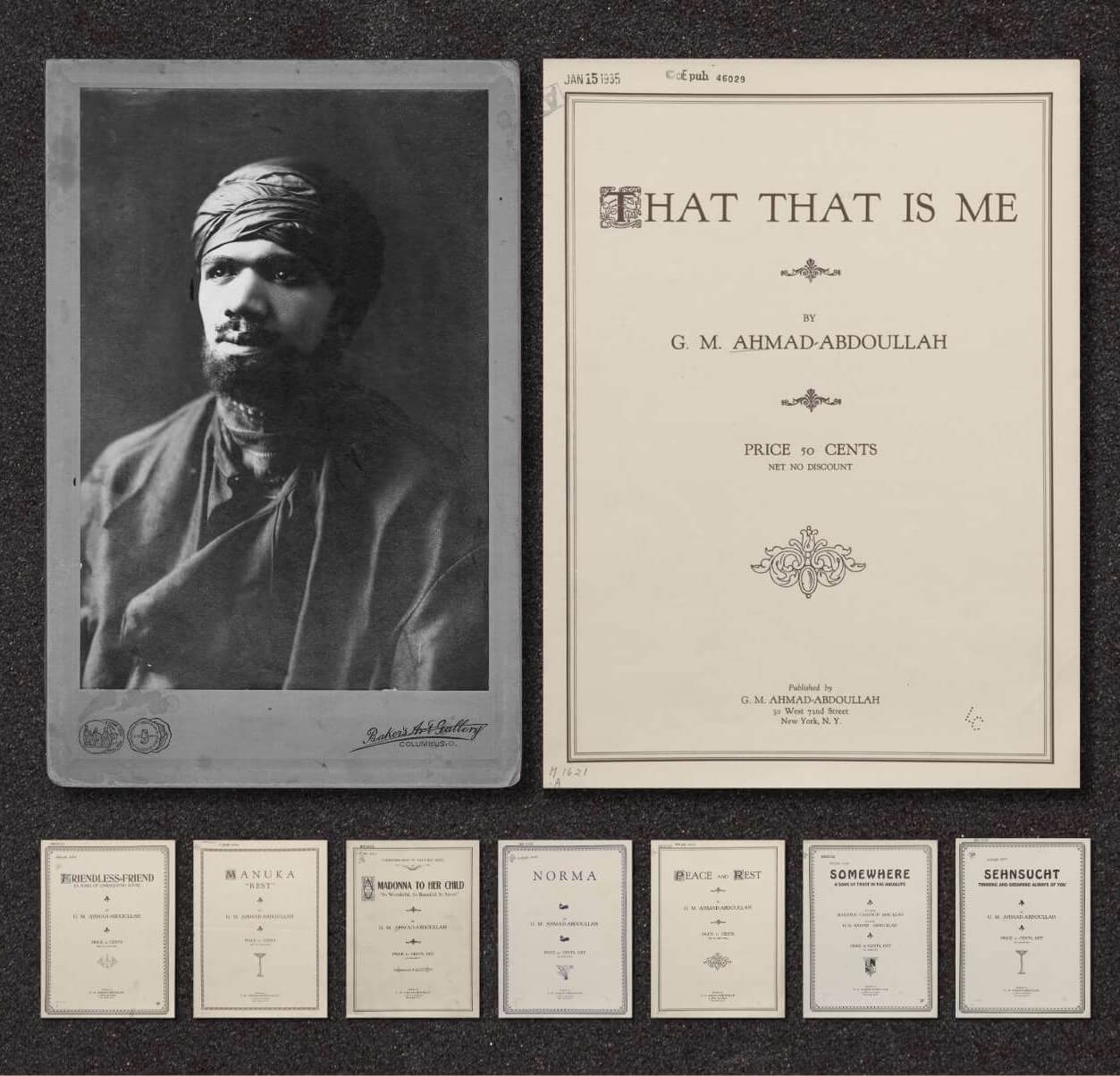
Great Hypnosis Audio
A Little Help Quieting the Mind
If your mind is racing and all the spiritual advice in the world isn’t helping right now, this is one of the practical tools we use ourselves.
A 26-minute hypnosis session for calming excessive fear, worry, and that awful feeling that something is about to go wrong.
Also recommended:
Affiliate Disclosure: Cool Wisdom Books is an affiliate of Hypnosis Downloads. If you choose to purchase through the links above, we may earn a small commission at no extra cost to you. We only share resources that we personally use and trust. Your support helps sustain the ongoing historical research and digital archiving work at Cool Wisdom Books.

Amanita Muscaria: Psychedelic Mushroom


Why Mitch Horowitz’s New Book “Esoterika” is a Necessary, Astringent Shock to the System – Review & Interview
For Neville Goddard students Esoterika presents a fascinating intellectual collision. How does the historian who sparked the modern revival of Neville reconcile Goddard’s limitless promise that “Imagination is God” with Gurdjieff’s bleak assertion that “Man is a machine”?

Your Personalized AI Astrologer Prompt: Use AI as Your Personal Astrology Guide


If this free archive of Neville Goddard’s lectures has helped you on your journey, consider helping keep it alive for others.
Support Cool Wisdom Books: Donate via Ko-fi.
